My role
Strategic facilitation
Co-organized and facilitated biannual roadmap workshops, aligning cross-functional teams on priorities and strategic initiatives.
Continuous improvement
Led post-launch retrospectives to capture learnings, surface opportunities, and improve how the team worked together.
Product vision & strategy
Introduced service blueprinting to connect the end-to-end experience, shape product direction, and align stakeholders around a shared vision.
End-to-end experience design
Owned the visual and interaction design across the experience, balancing customer needs, business objectives, and technical constraints.
Problem
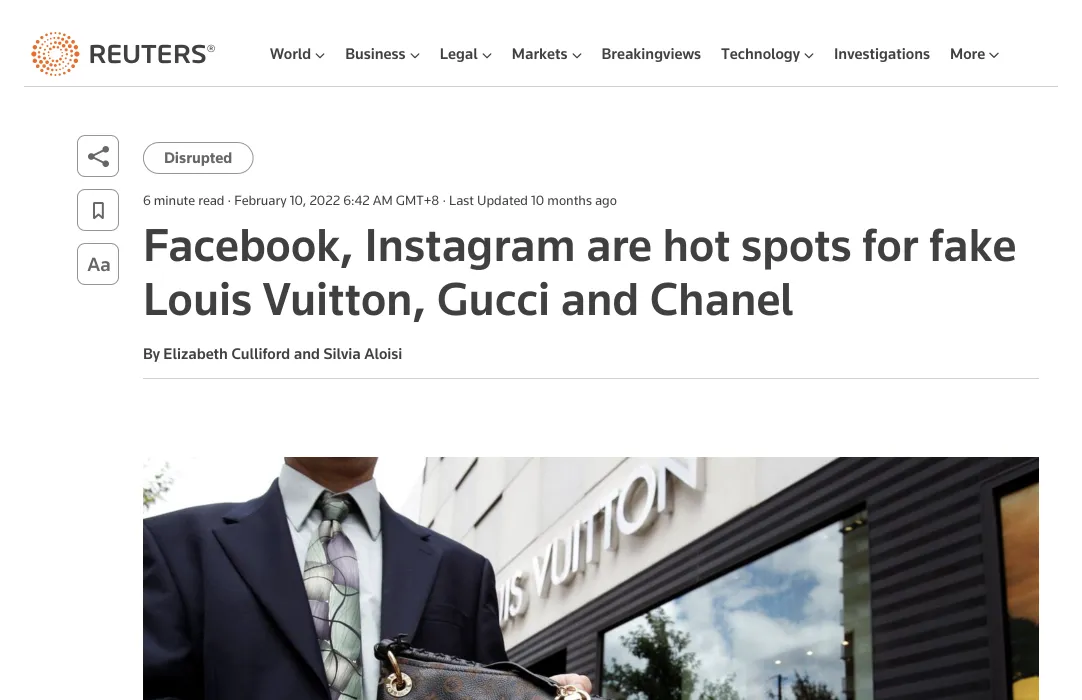
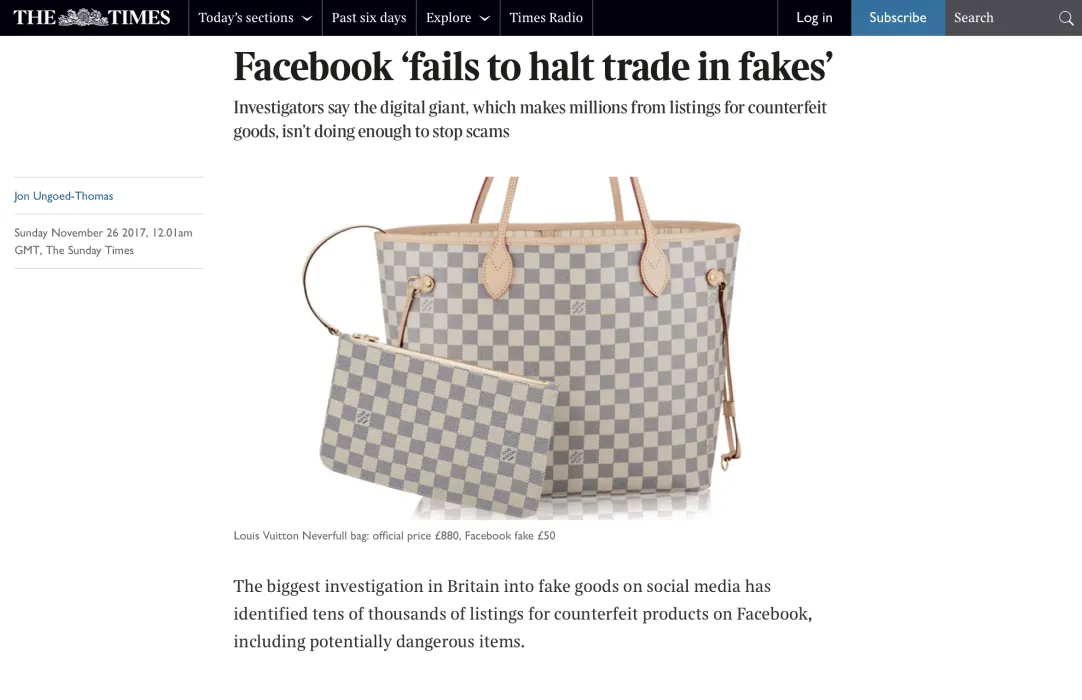
Meta’s consumer platforms, Facebook and Instagram, are inundated with accounts and content that infringe on brand rights and trademarks. This includes counterfeiters operating at scale, selling fake products and exploiting the trust associated with established brands.
At this scale, identifying and distinguishing counterfeit products from authentic ones is a significant challenge for Meta.
How it works
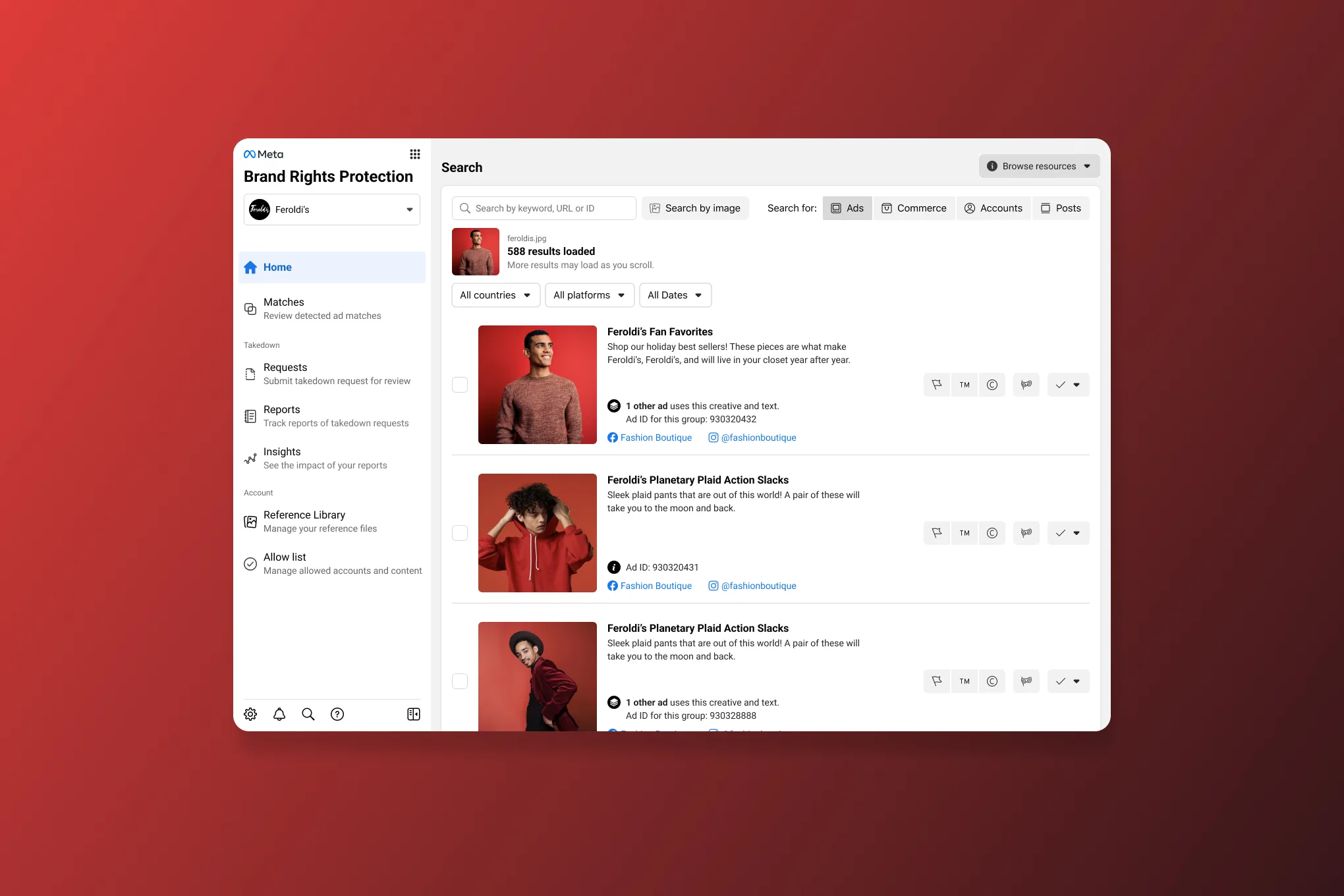
Brand Rights Protection (BRP) is a product which leverages on the expertise of brands to tell us who and what infringe on their intellectual property.
An example would be a popular sports brand who’s aware of the most nuanced details regarding the authenticity of a particular sneaker—this might be stitching details, colours, and materials.
Where we started
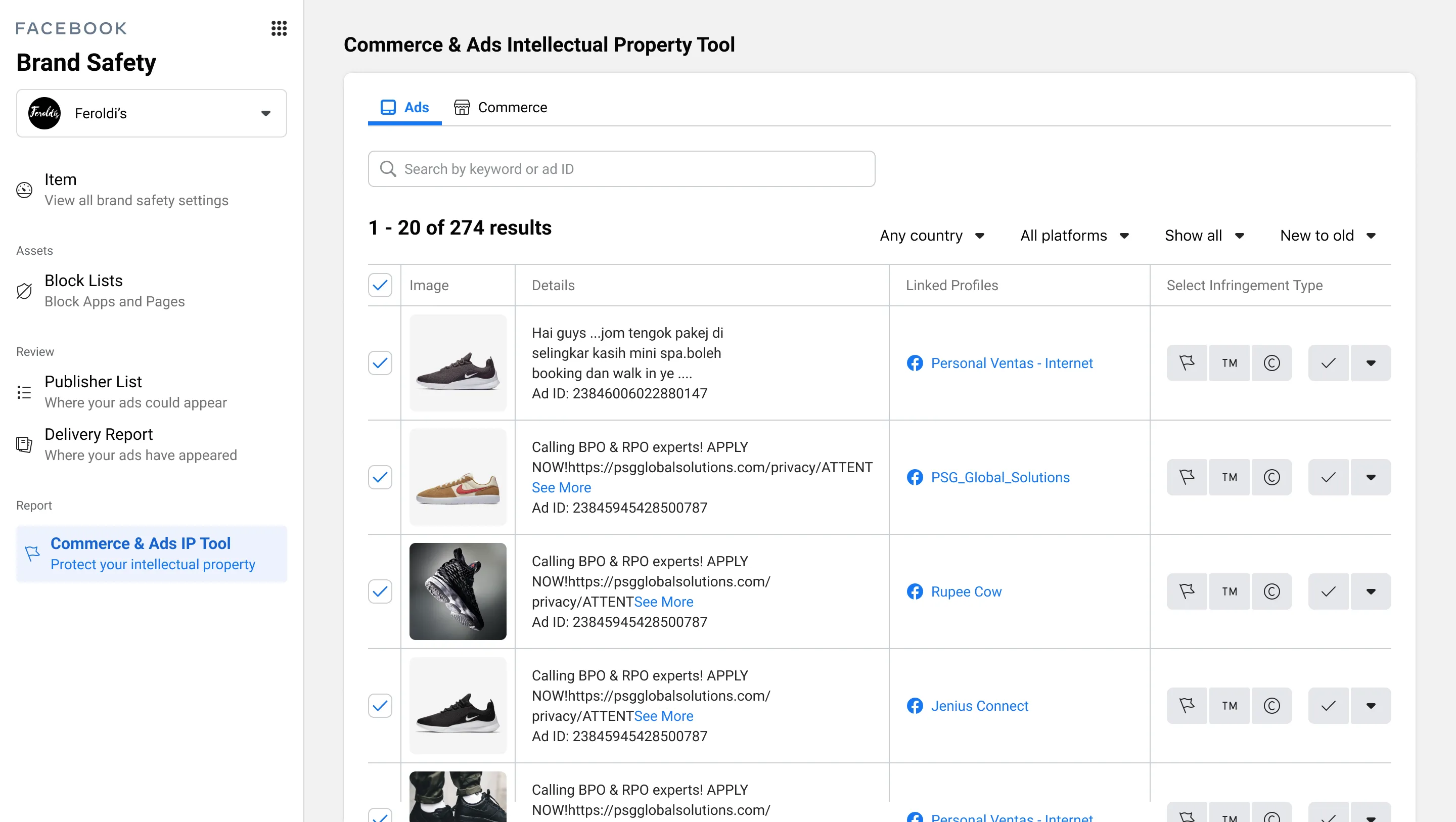
A rudimentary version called Commerce & Ads IP Tool already existed but only had basic features to search and report infringing ads and listings from Marketplace.
Amid the growing volume of infringing content on Facebook and Instagram, Meta faced legal action from a major luxury fashion brand. The case was settled with an explicit set of requirements outlining features Meta needed to implement.
In Q4 2020, ownership of the Commerce & Ads IP Tool was transferred to our team in Singapore. This marked the first time the product received dedicated design support.
We began by addressing its existing experience and eventually rebranded the product as Brand Rights Protection.
Collaborating with research
To diagnose the existing product experience, I partnered closely with UX Research to engage customers through three distinct interview formats. Led by our UX Researcher, these sessions gave us an opportunity to better understand our customers' workflows, uncover their frustrations, and identify unmet needs.
01Discovery calls
Interview on a broad topic or problem space (5–10 customers)
- Session script (Shared responsibility)
- Participant outreach/scheduling (Led by UX Researcher)
- NDA (Led by UX Researcher)
- Set up sign-up slots for team to shadow/observe (Shared responsibility)
- Session facilitation (Shared responsibility)
- Synthesis and analysis (Shared responsibility)
- Insights delivery (Led by UX Researcher)
02Concept testing
Interview/task-based test using a prototype of a feature prior to launch (5–10 customers)
- Session script (Shared responsibility)
- Prototyping with mock data/setup prototype environment (Led by Product Designer)
- Participant outreach/scheduling (Led by UX Researcher)
- NDA (Led by UX Researcher)
- Set up sign-up slots for team to shadow/observe (Shared responsibility)
- Session facilitation (Shared responsibility)
- Synthesis and analysis (Shared responsibility)
- Insights delivery (Led by UX Researcher)
03Beta testing
Interview/task-based test using a controlled production rollout (5–10 customers)
- Session script (Shared responsibility)
- Participant outreach/scheduling (Led by UX Researcher)
- Coordinate with engineers on Business IDs for gatekeeper to allow (Shared responsibility)
- NDA (Led by UX Researcher)
- Set up sign-up slots for team to shadow/observe (Shared responsibility)
- Session facilitation (Shared responsibility)
- Synthesis and analysis (Shared responsibility)
- Insights delivery (Led by UX Researcher)
- Led by UX Researcher
- Led by Product Designer
- Shared responsibility
Research insights
- 01
Deep domain expertise
Customers have an intimate understanding of their brands and products, making their expertise valuable input for improving Meta's machine learning models.
- 02
A risky line of work
Some customers received threats after reporting infringement, highlighting the need to protect their identities.
- 03
Infringements are everywhere
Customers frequently spotted infringing content in their personal feeds, making accessible reporting across Meta's surfaces essential.
- 04
The actor matters
Beyond removing infringing content, customers wanted to identify and track the actors responsible.
- 05
Adversaries operate in networks
Infringement often involved interconnected accounts and entities, not just individual bad actors.
- 06
Demonstrating impact
Customers needed data and insights to communicate the impact of their brand protection efforts internally.
Influencing a service design mindset
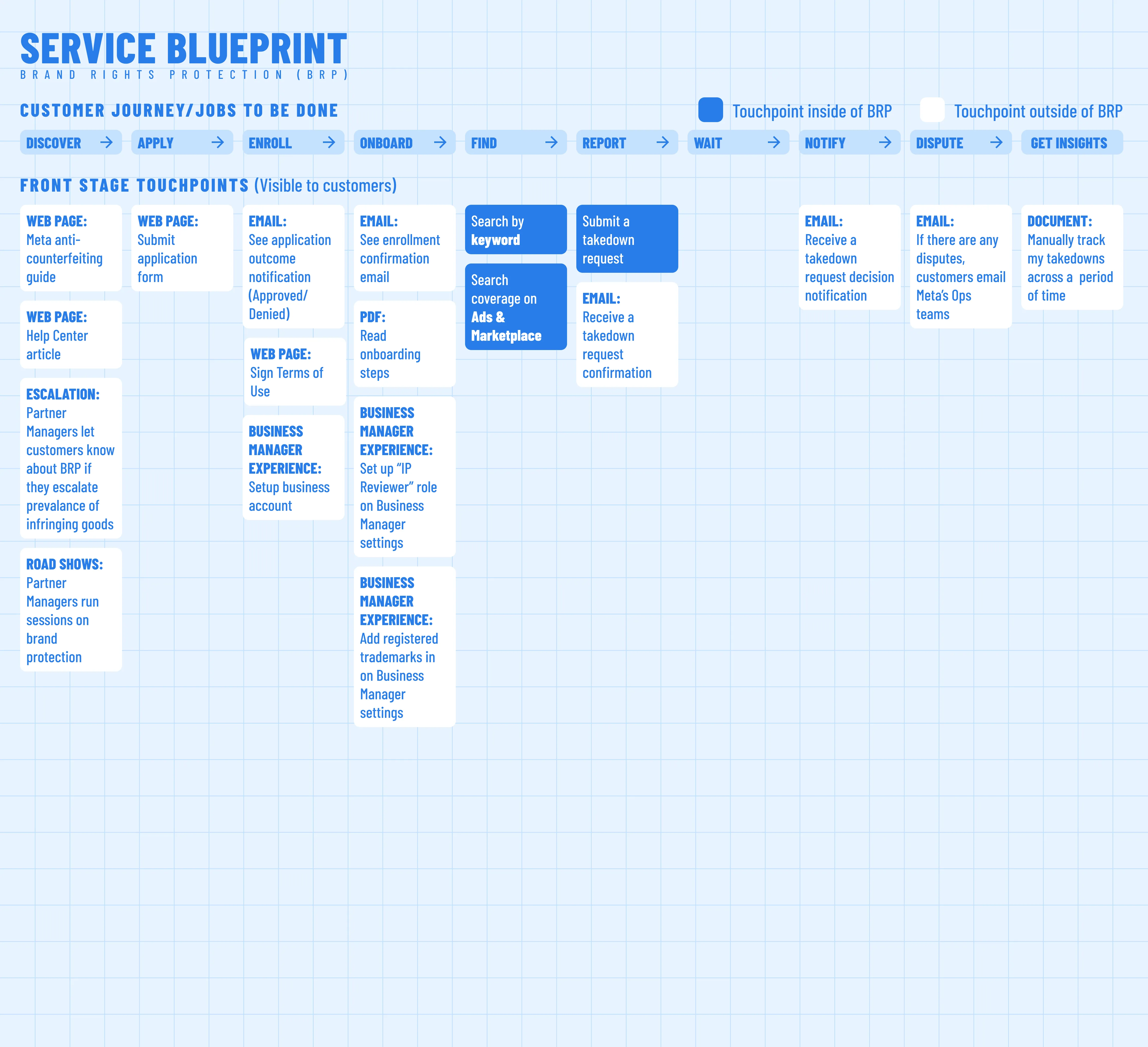
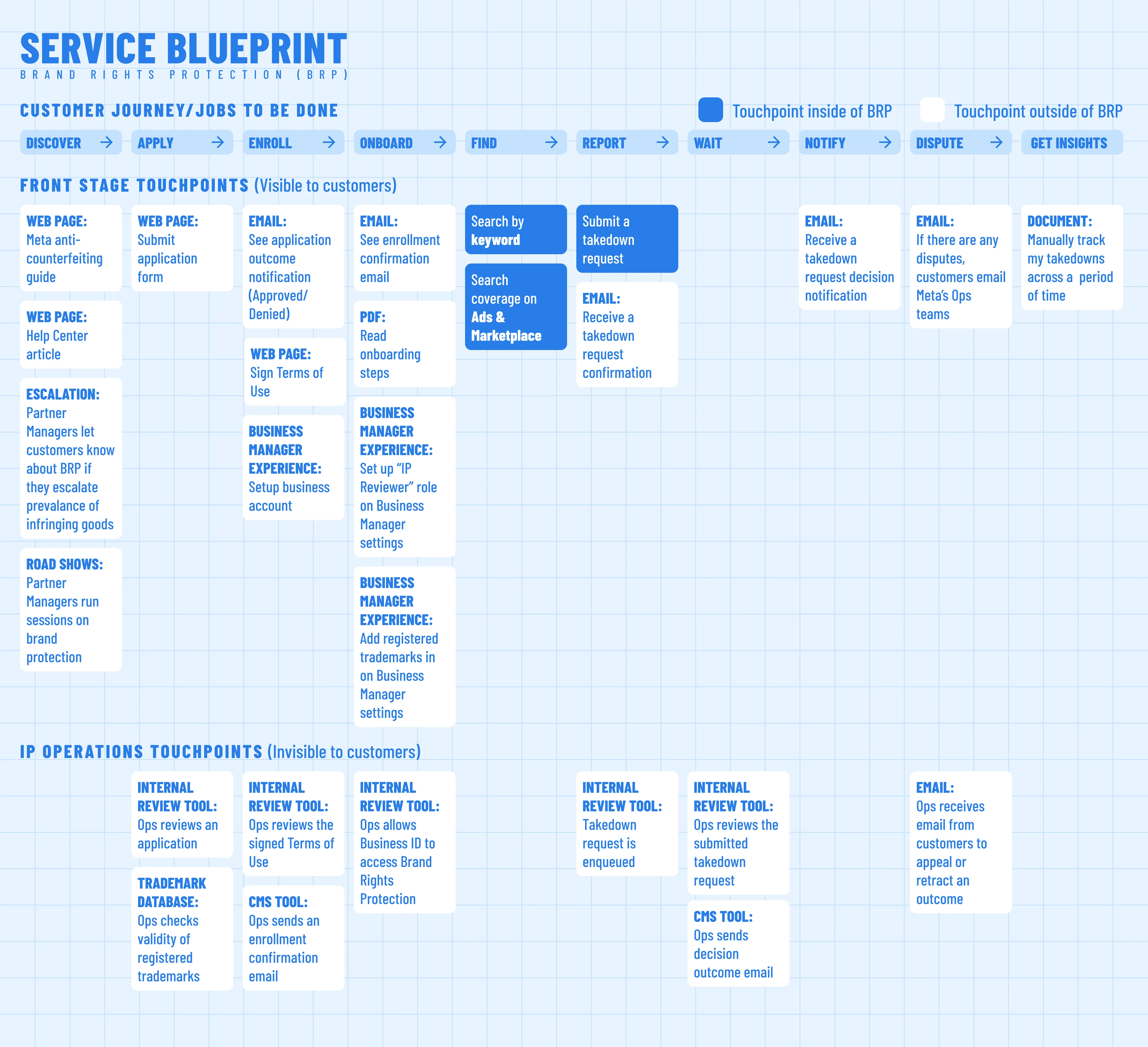
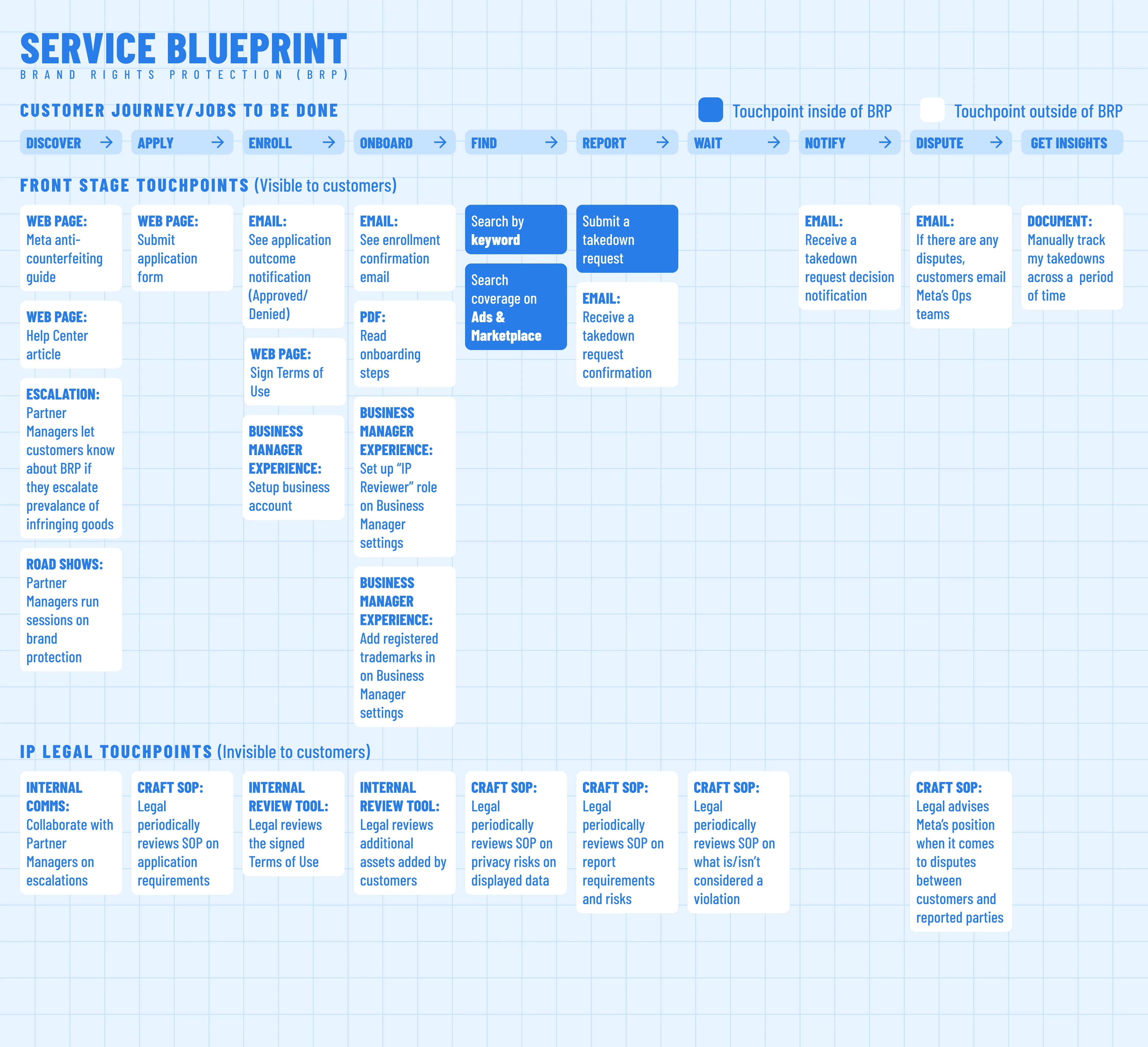
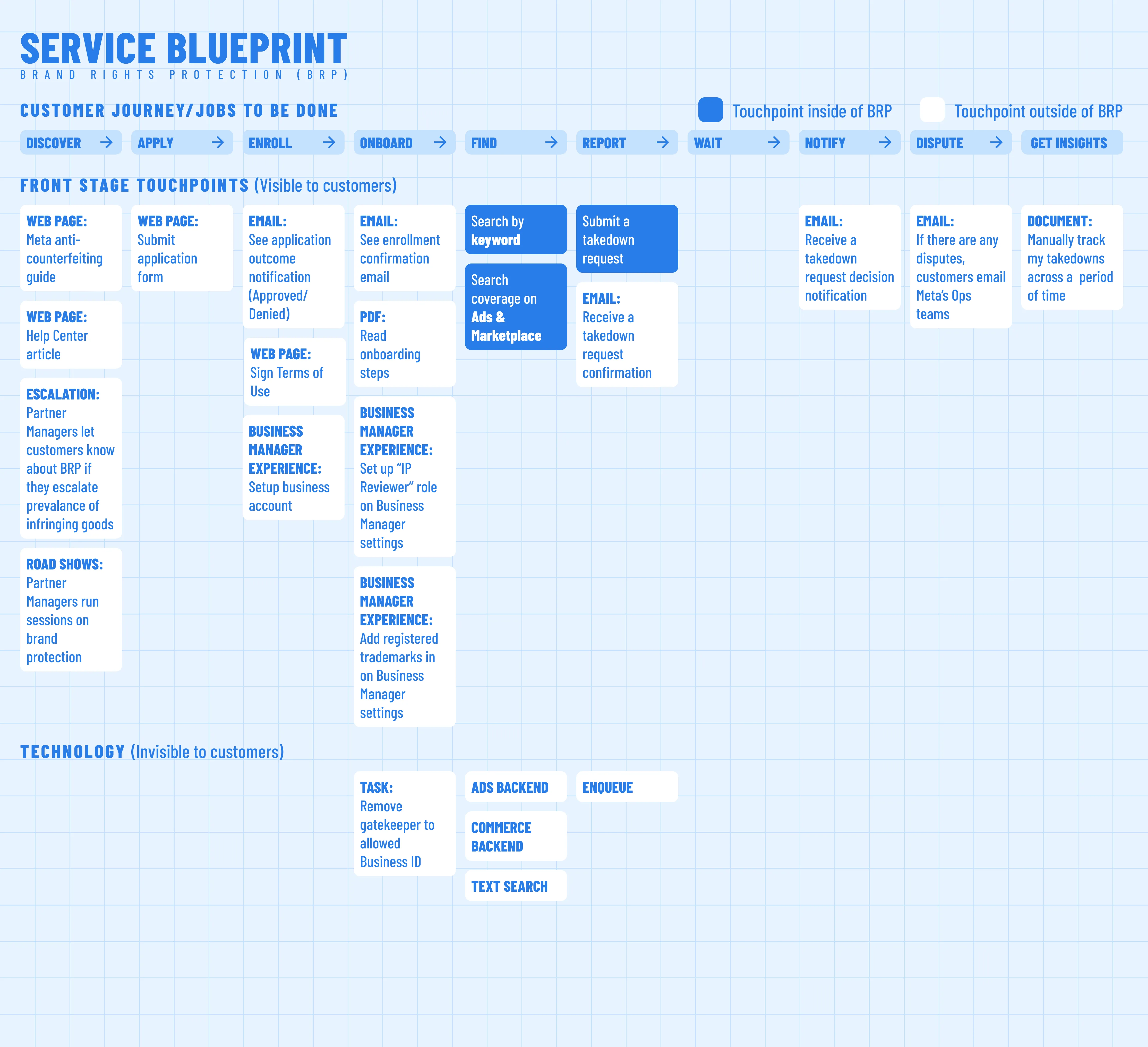
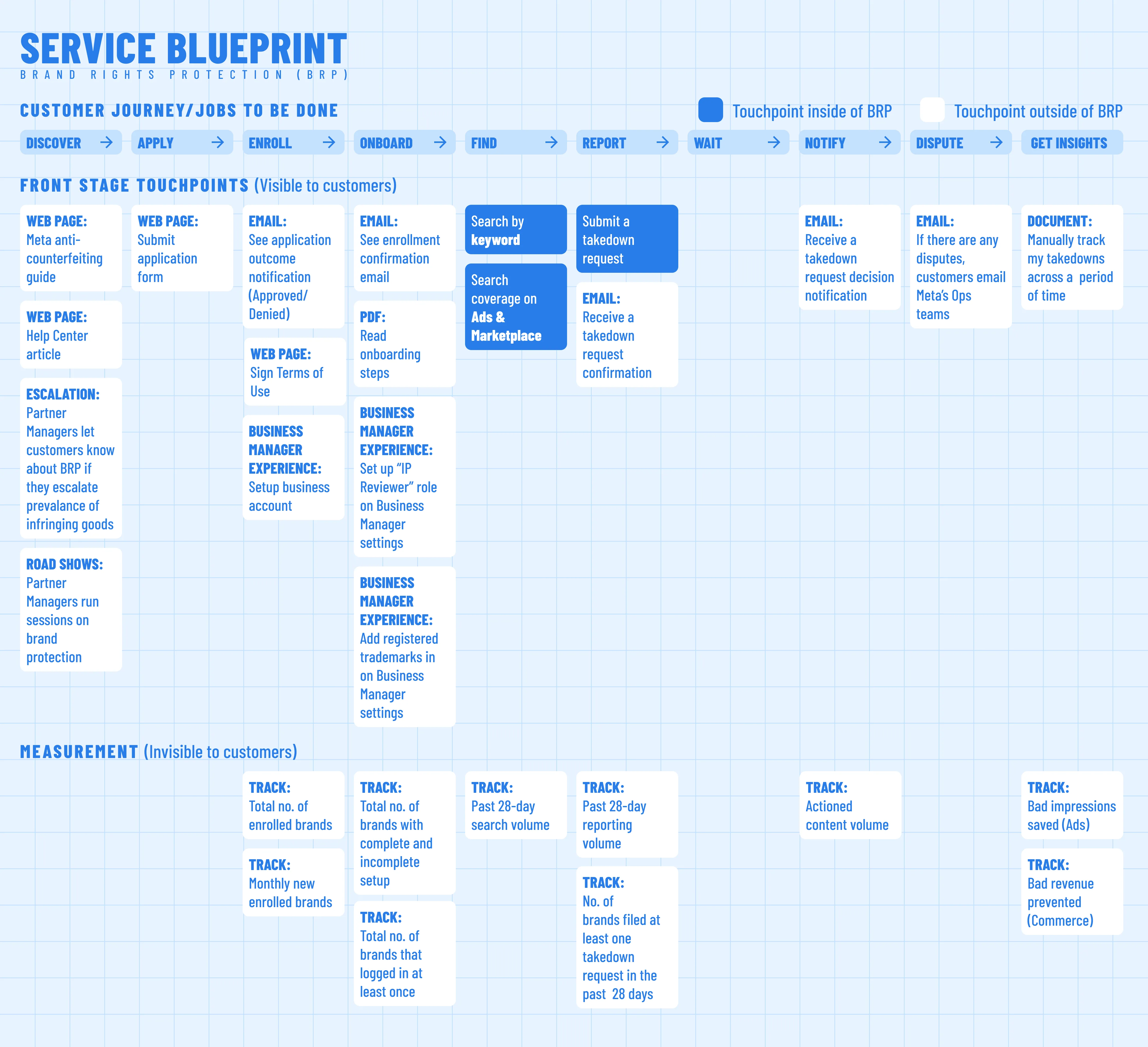
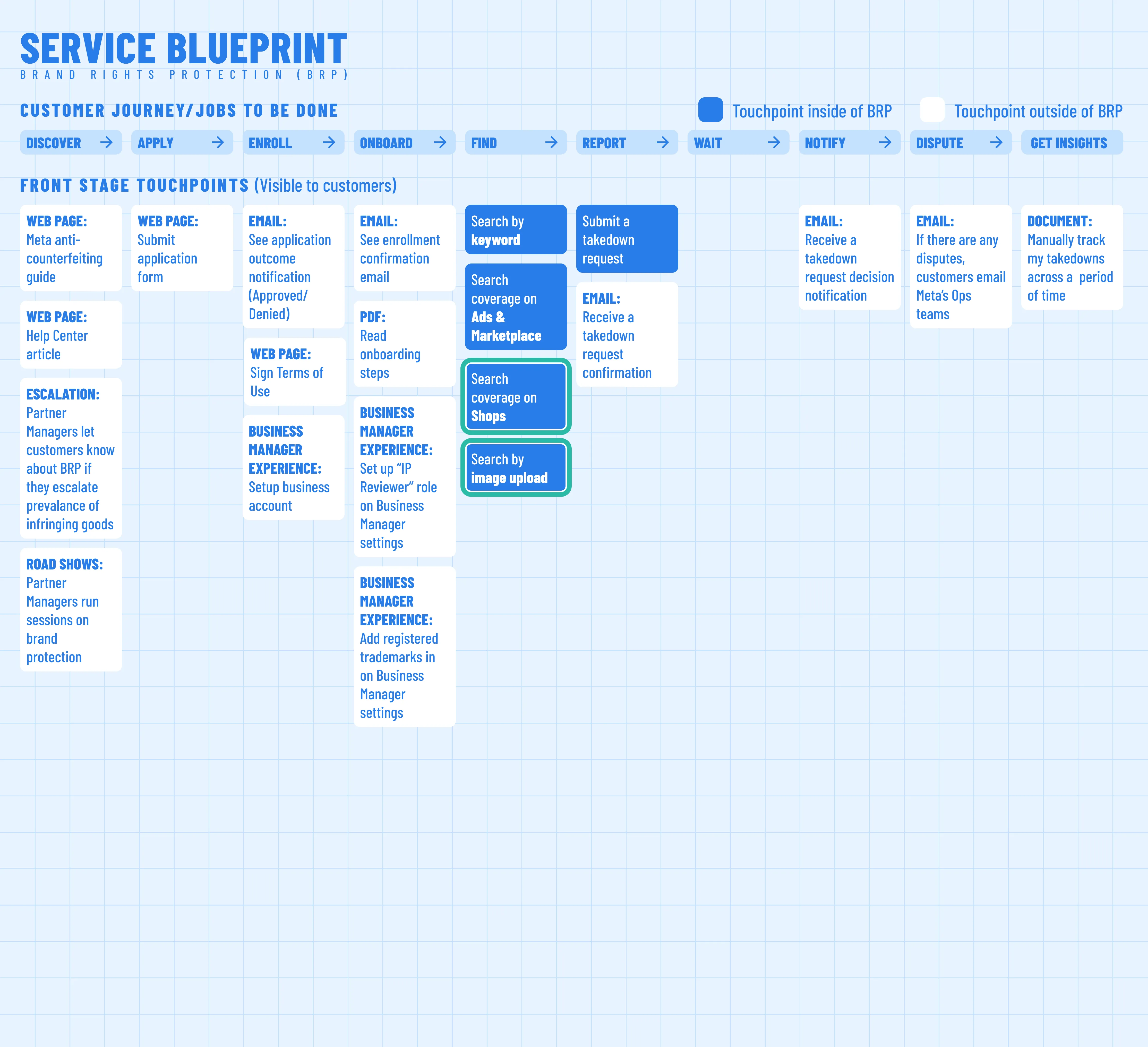
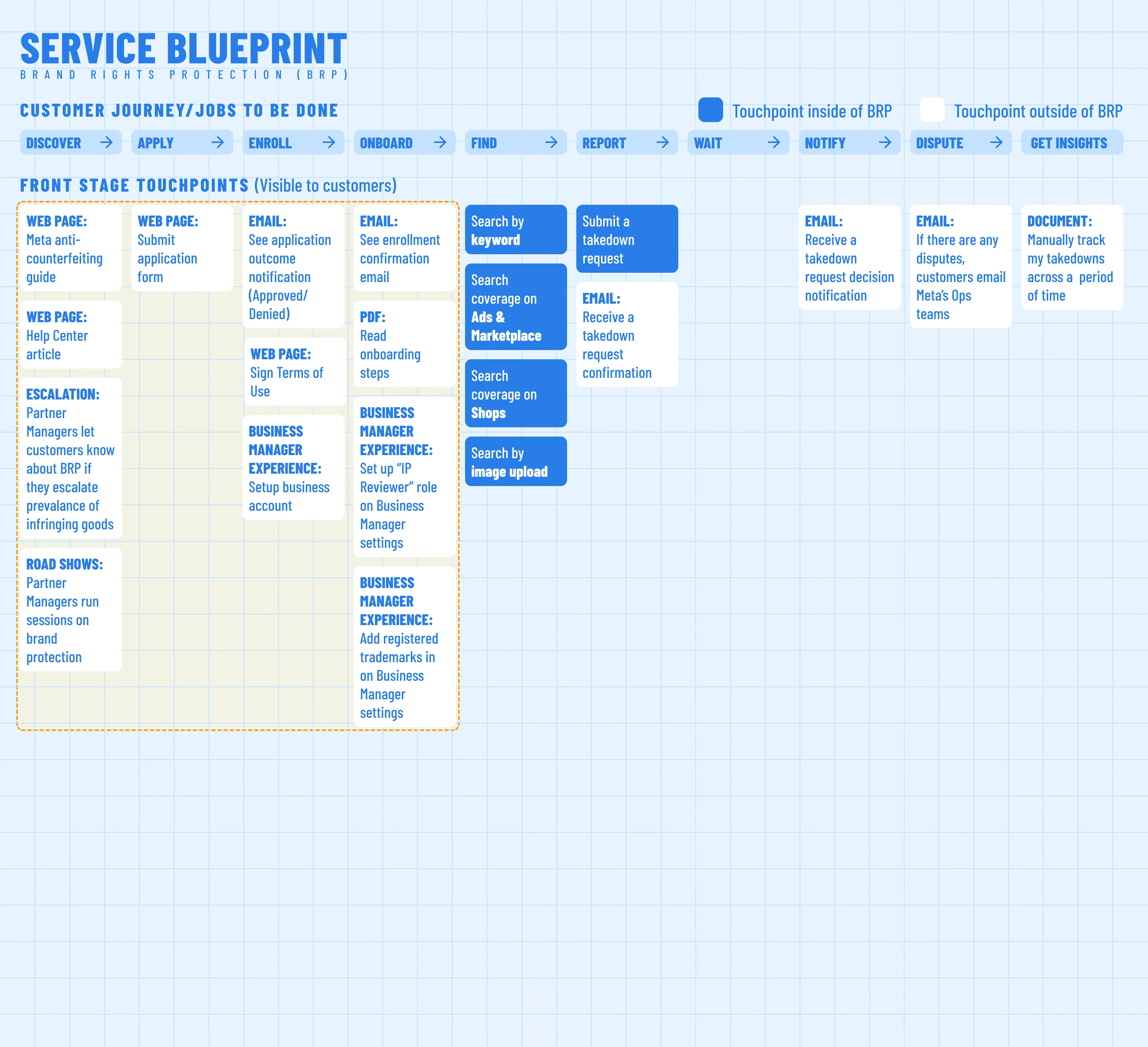
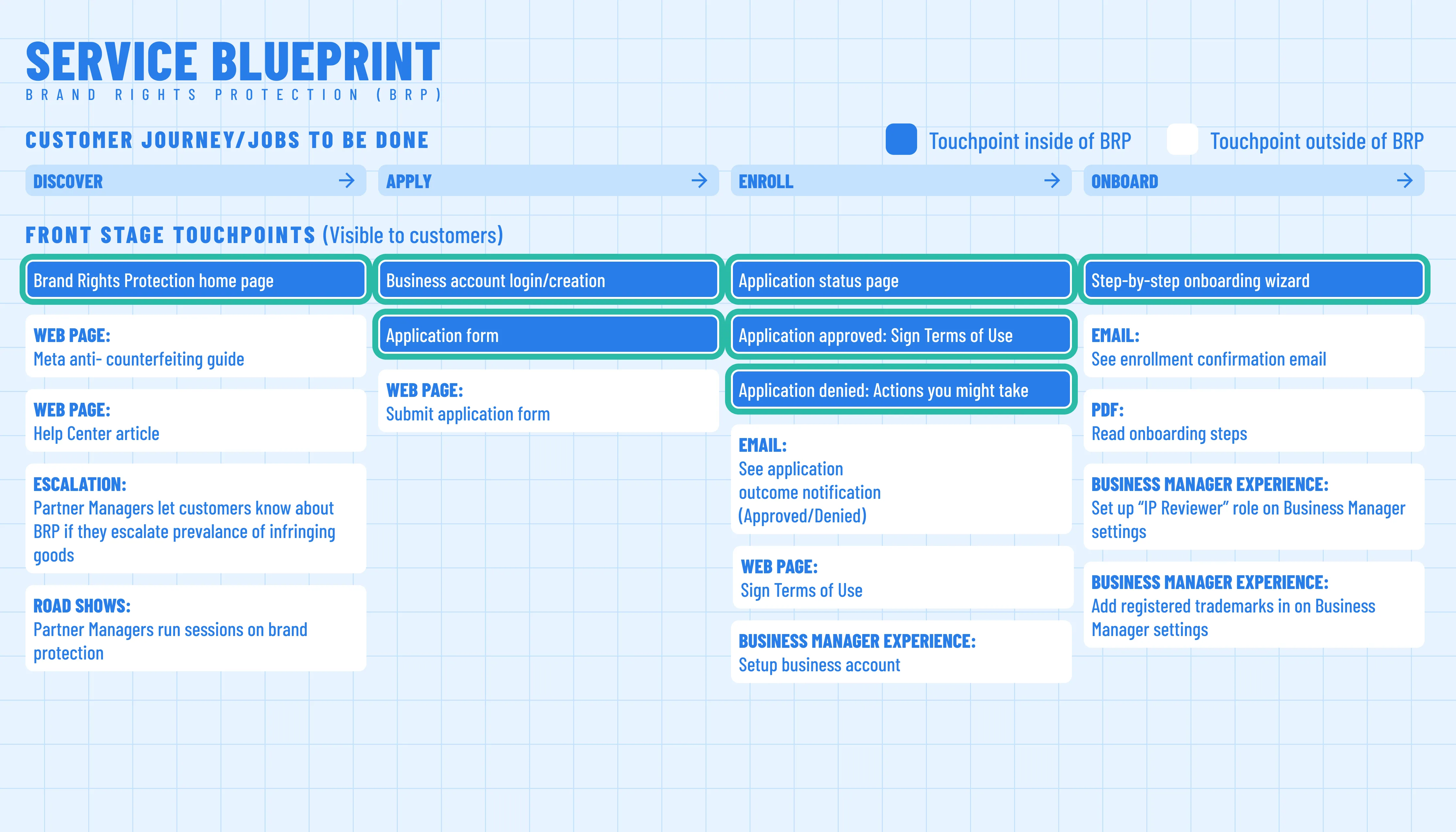
Given the complexity of the product, the team lacked a holistic view of the customer experience and the backstage processes that supported it.
I championed a service design approach and introduced service blueprinting to connect these moving parts. This gave the team a shared understanding of the end-to-end ecosystem, helping us uncover gaps, identify opportunities, and make more informed prioritization decisions.
Application journey audit
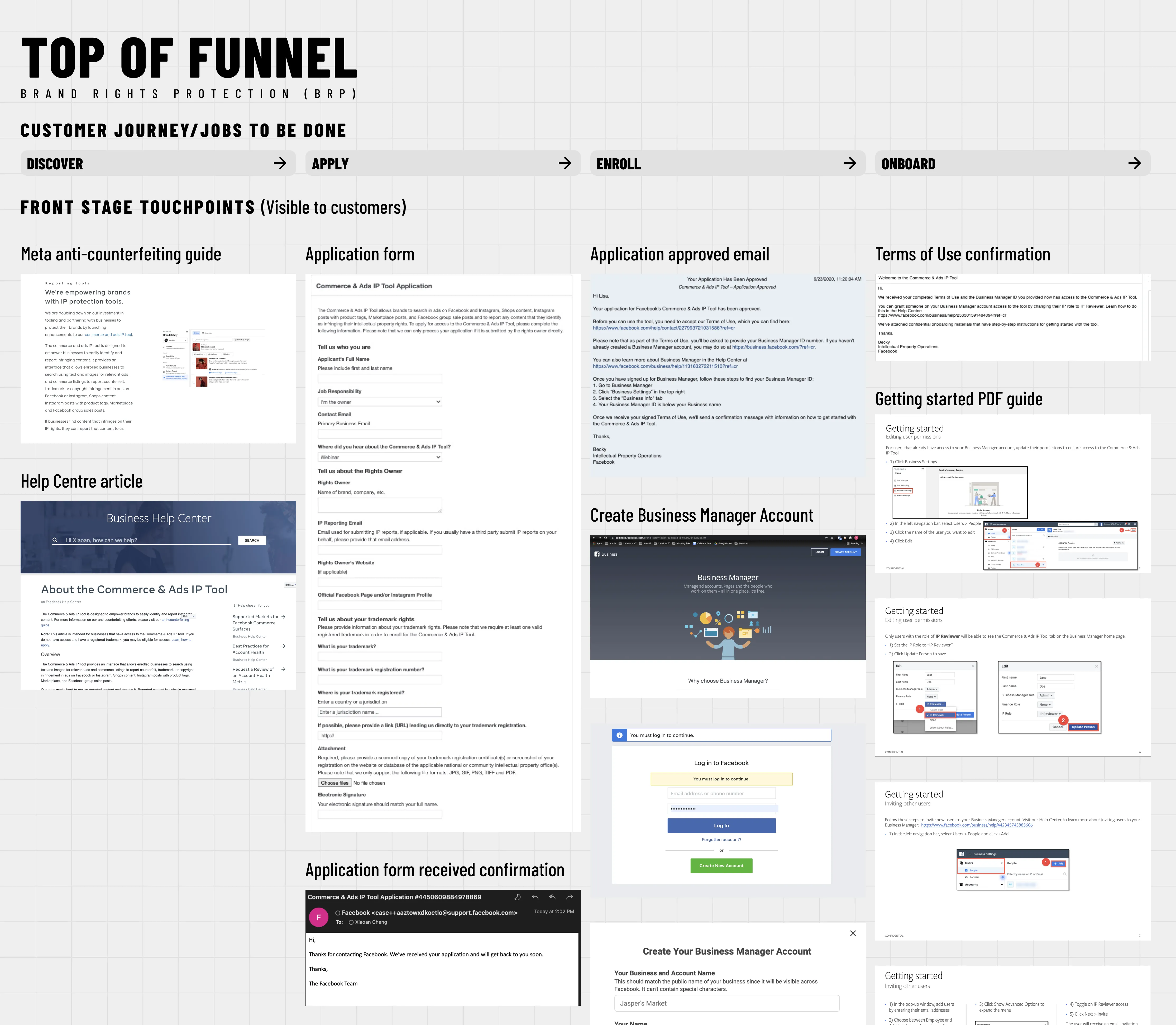
I collaborated with our Content Designer, who led an audit of the external communications customers encountered throughout the application process. This uncovered a fragmented journey spanning multiple web pages, PDF documents, and email exchanges.
The audit helped us identify inconsistencies and gaps in the communication experience, informing improvements to how we engaged with customers beyond the product itself.
Hypothesis
Desired outcome
Grow adoption by making it easier for businesses to join Brand Rights Protection, reducing reliance on Partner Manager support.
Intervention
Consolidate fragmented touchpoints into a cohesive, guided onboarding experience.
Validation
Measure success through:
- Monthly Active Businessesbaseline: ~50
- Customer satisfactionbaseline: 3.2/5
- Report action ratebaseline: ~90%
Objective
Empower more businesses to protect their brands while reducing infringing content across Meta's platforms.
Design & implementation
Streamlining the Top-of-Funnel Journey
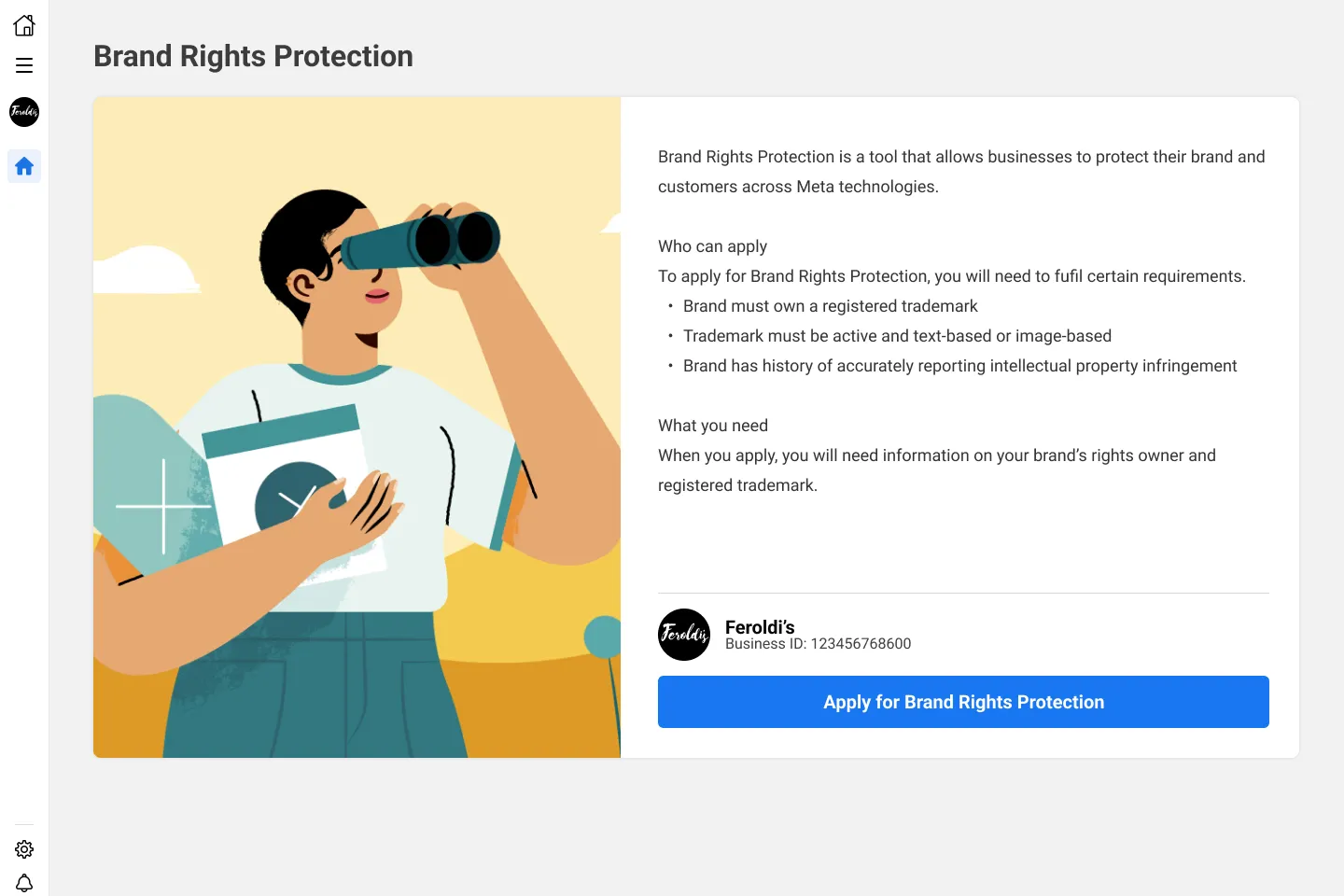
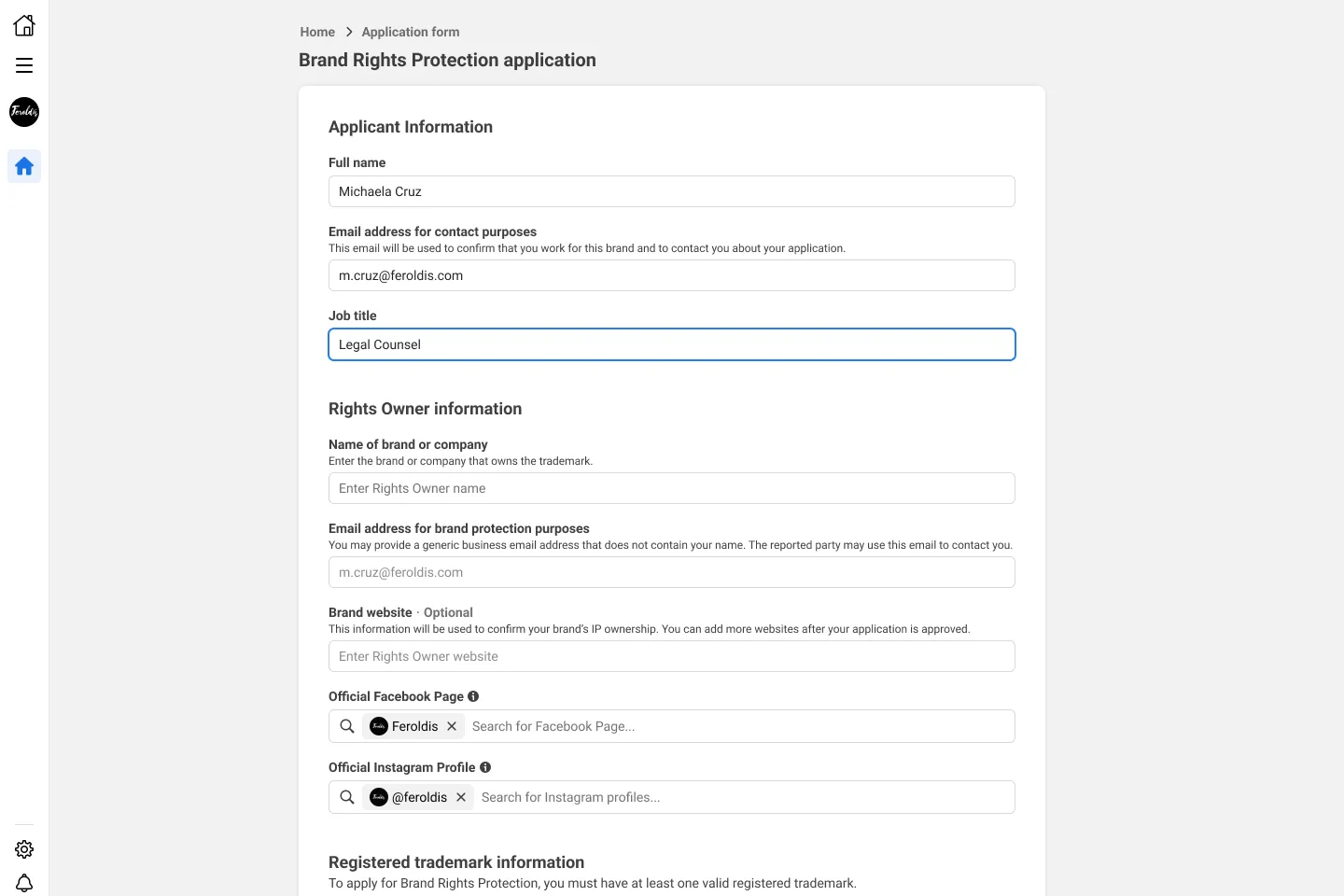
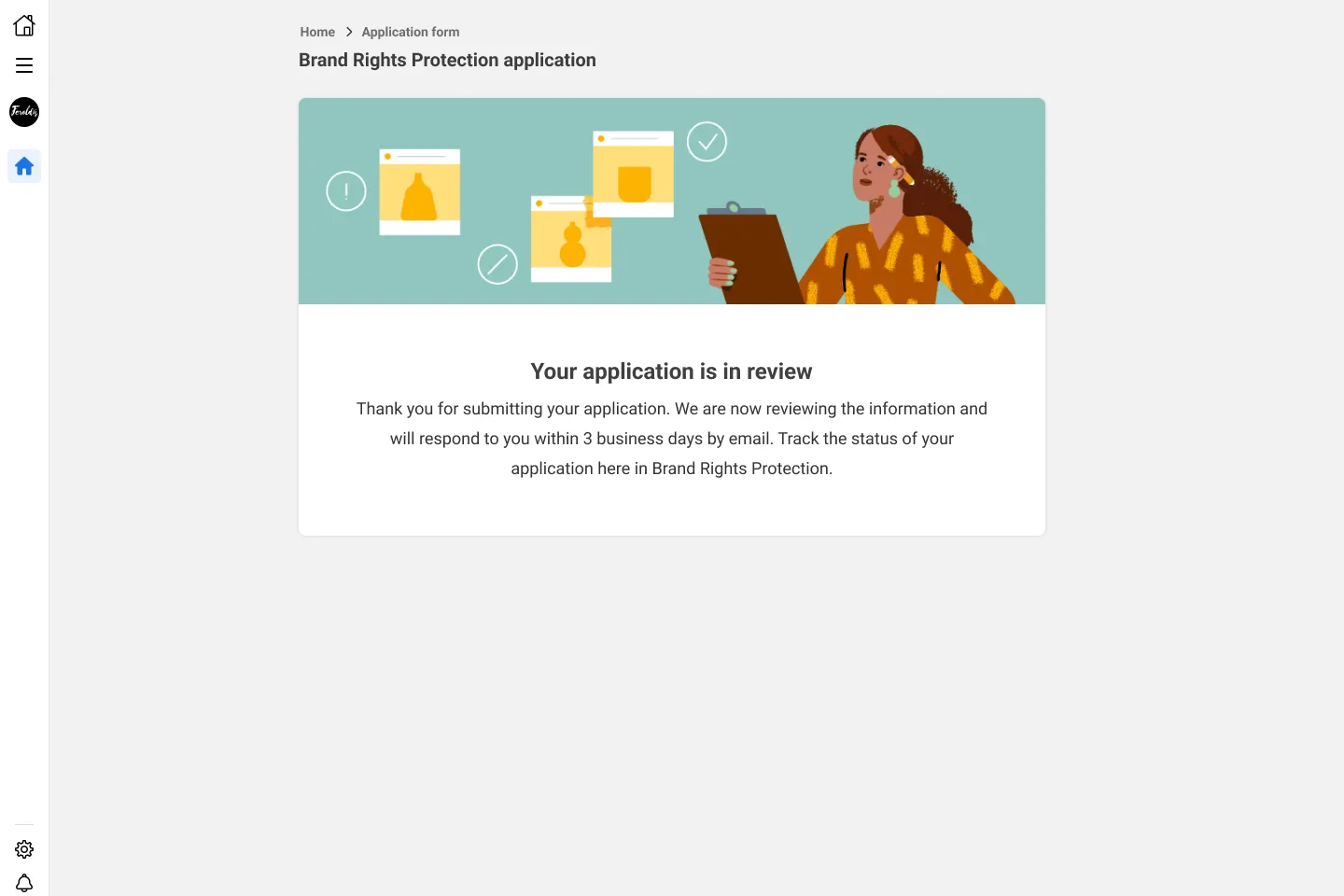
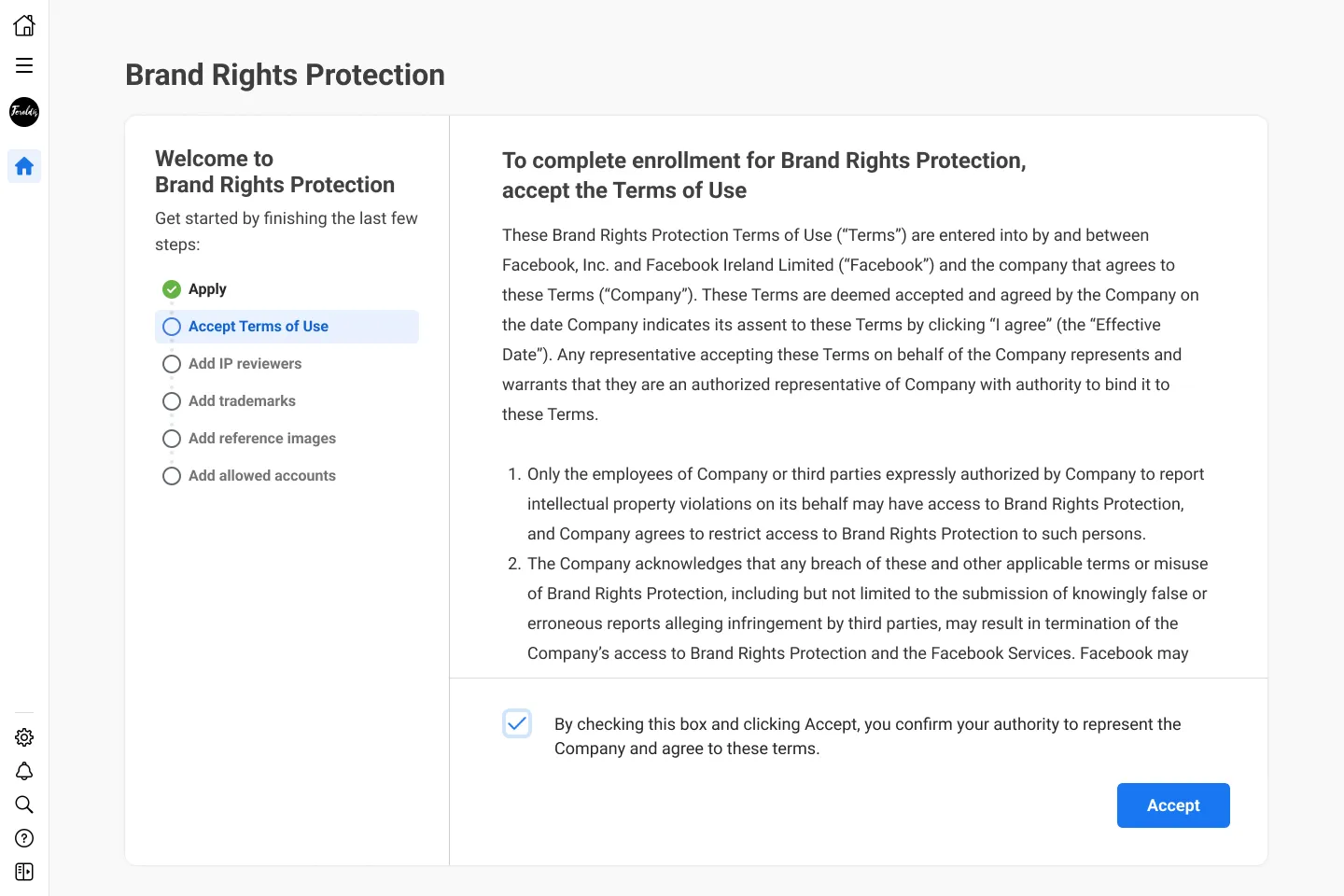
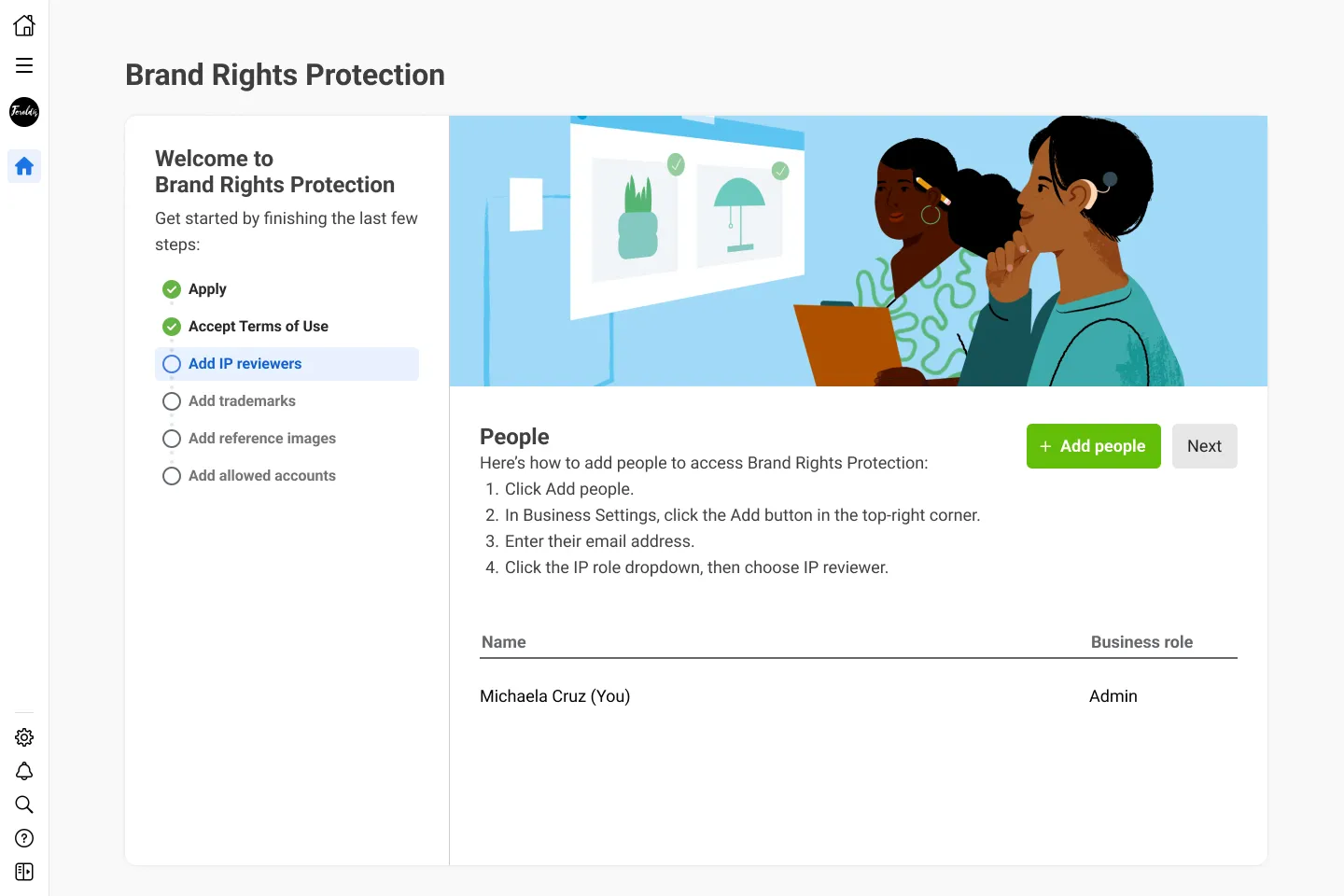
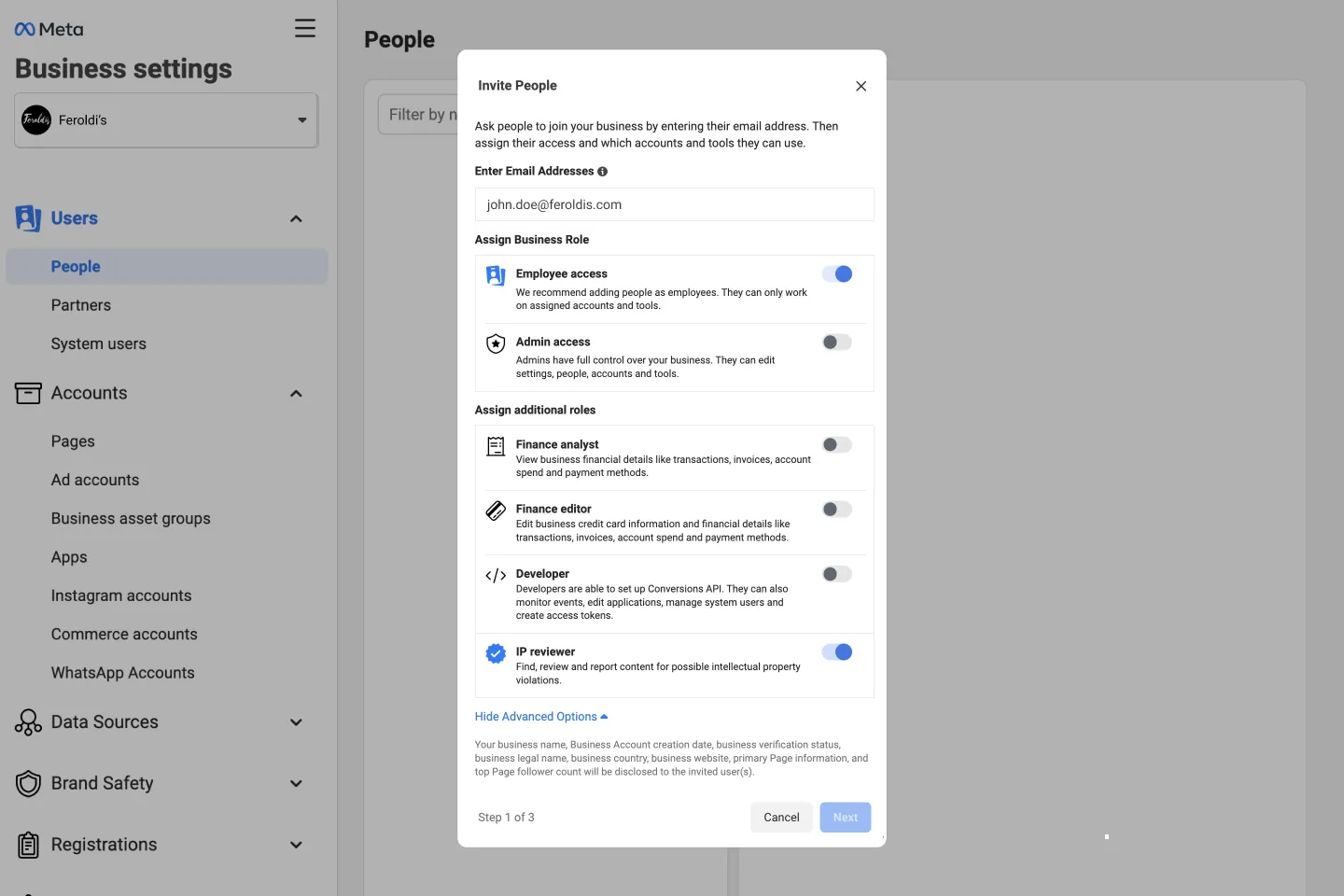
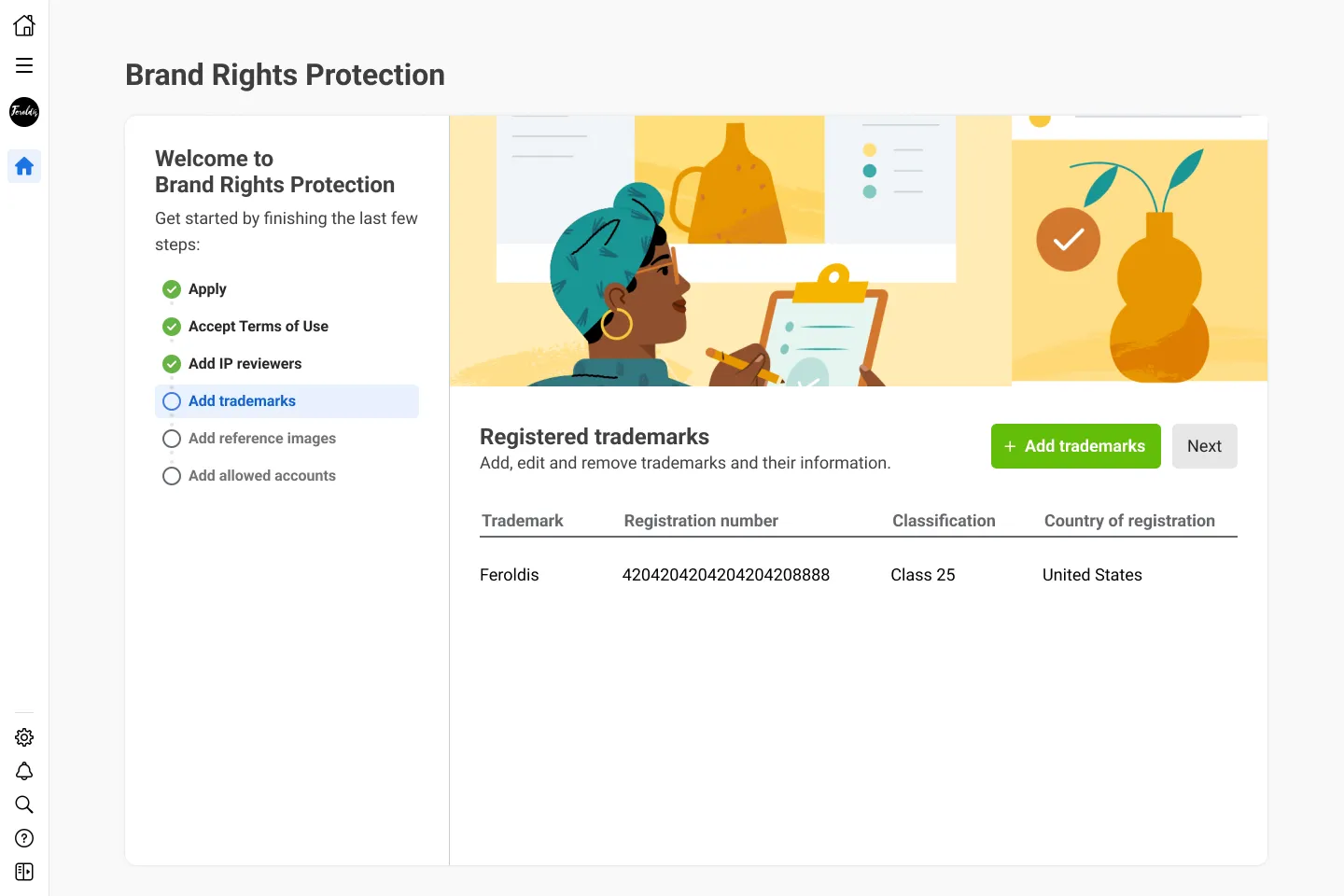
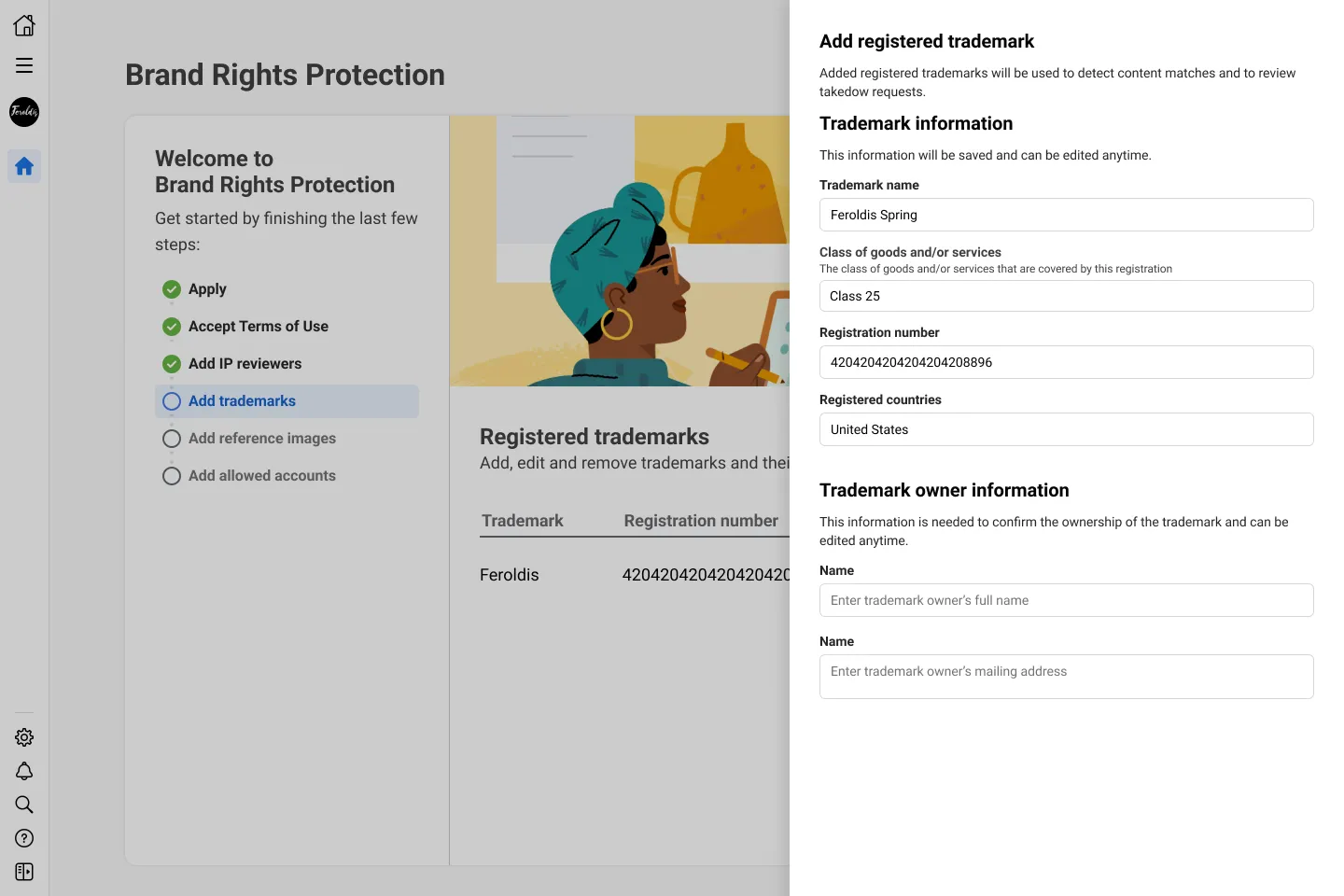
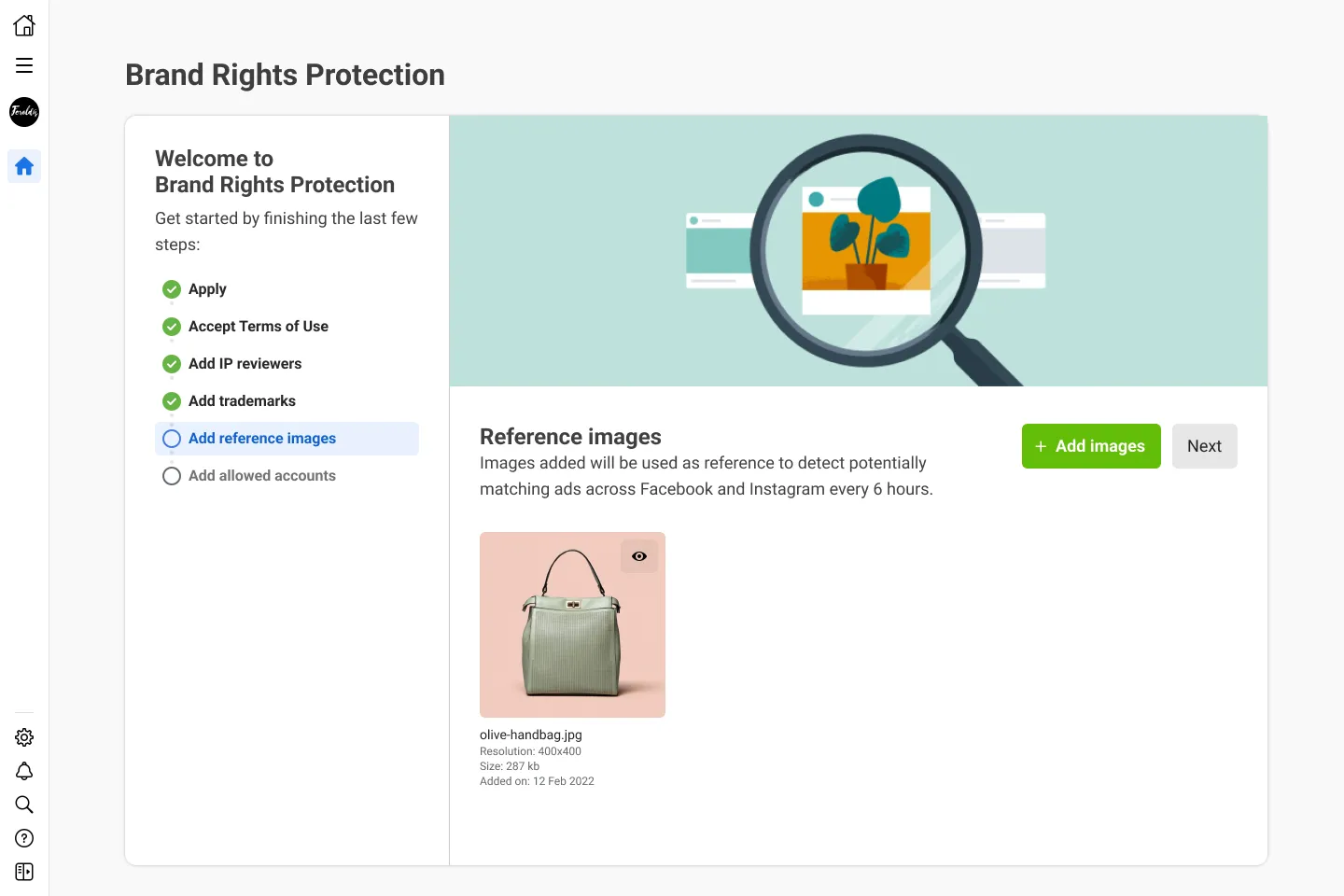
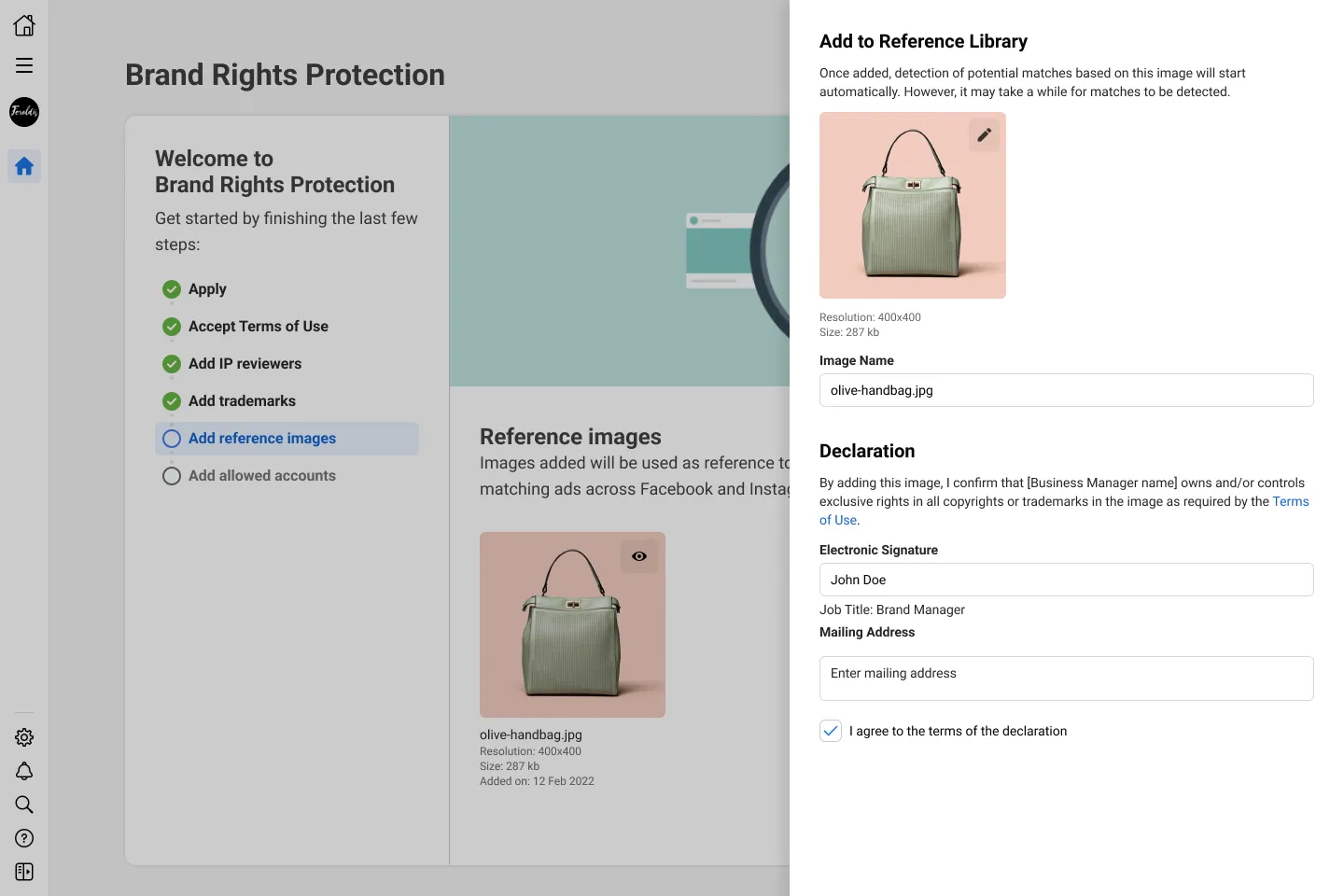
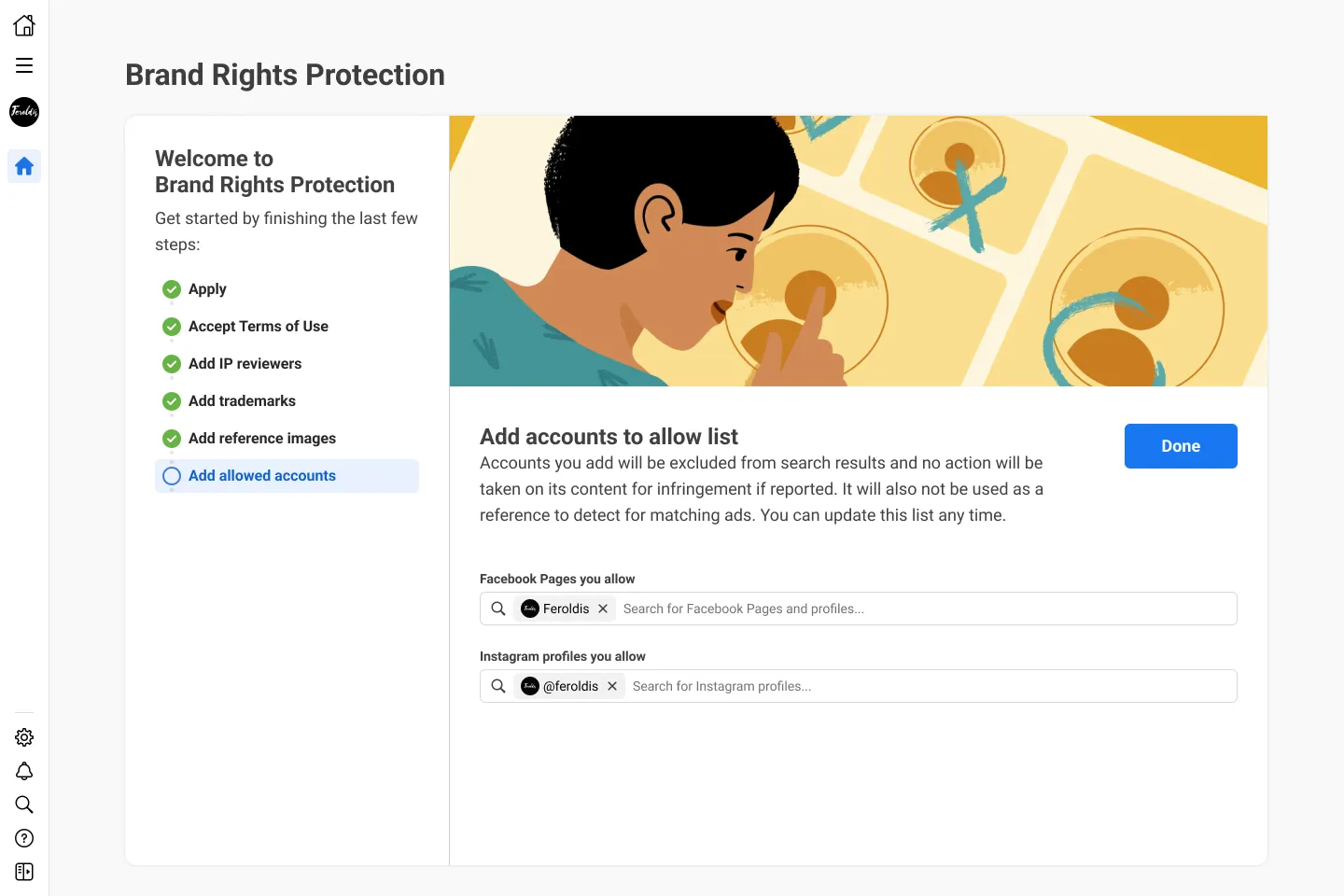
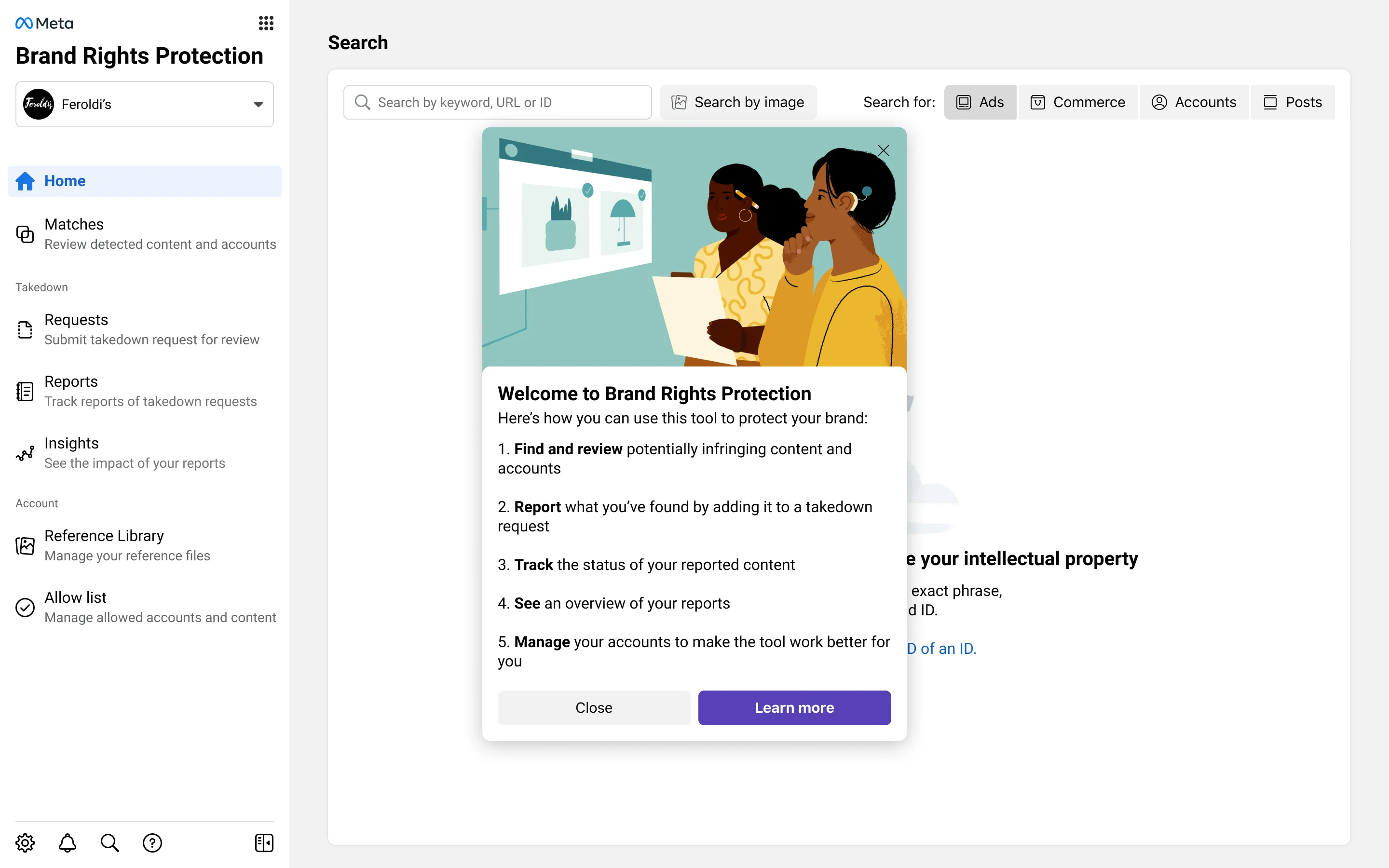
I reimagined Brand Rights Protection's onboarding by bringing previously fragmented setup steps into a cohesive, guided wizard. While some workflows, such as user and role management, still relied on integrations with other teams' systems, the redesigned experience gave users a more structured and intuitive path to getting started.
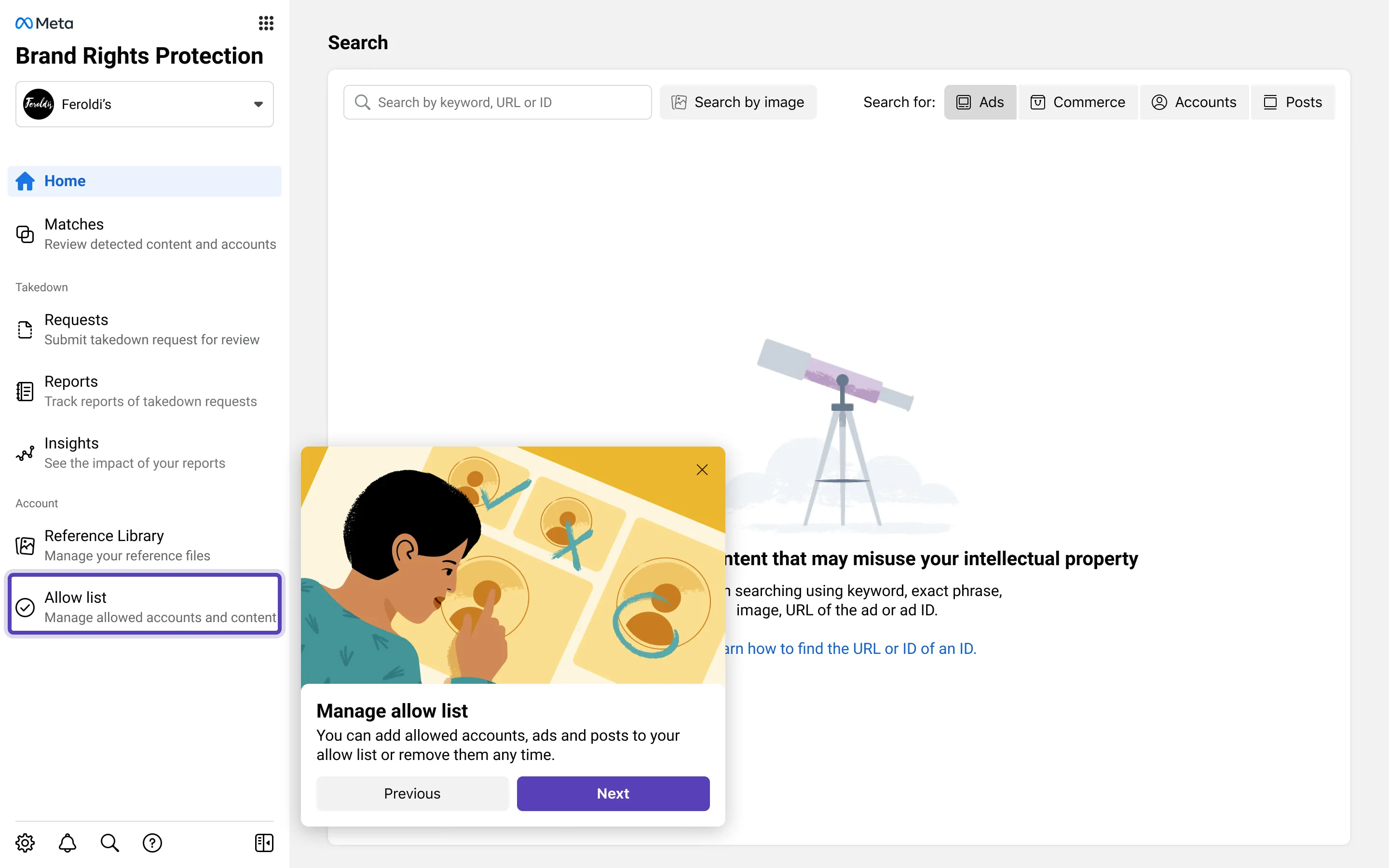
I also proactively collaborated with the Creatives team to introduce custom product illustrations, making the experience more engaging and approachable while giving the product a stronger visual identity.
Bolstering our core functionality
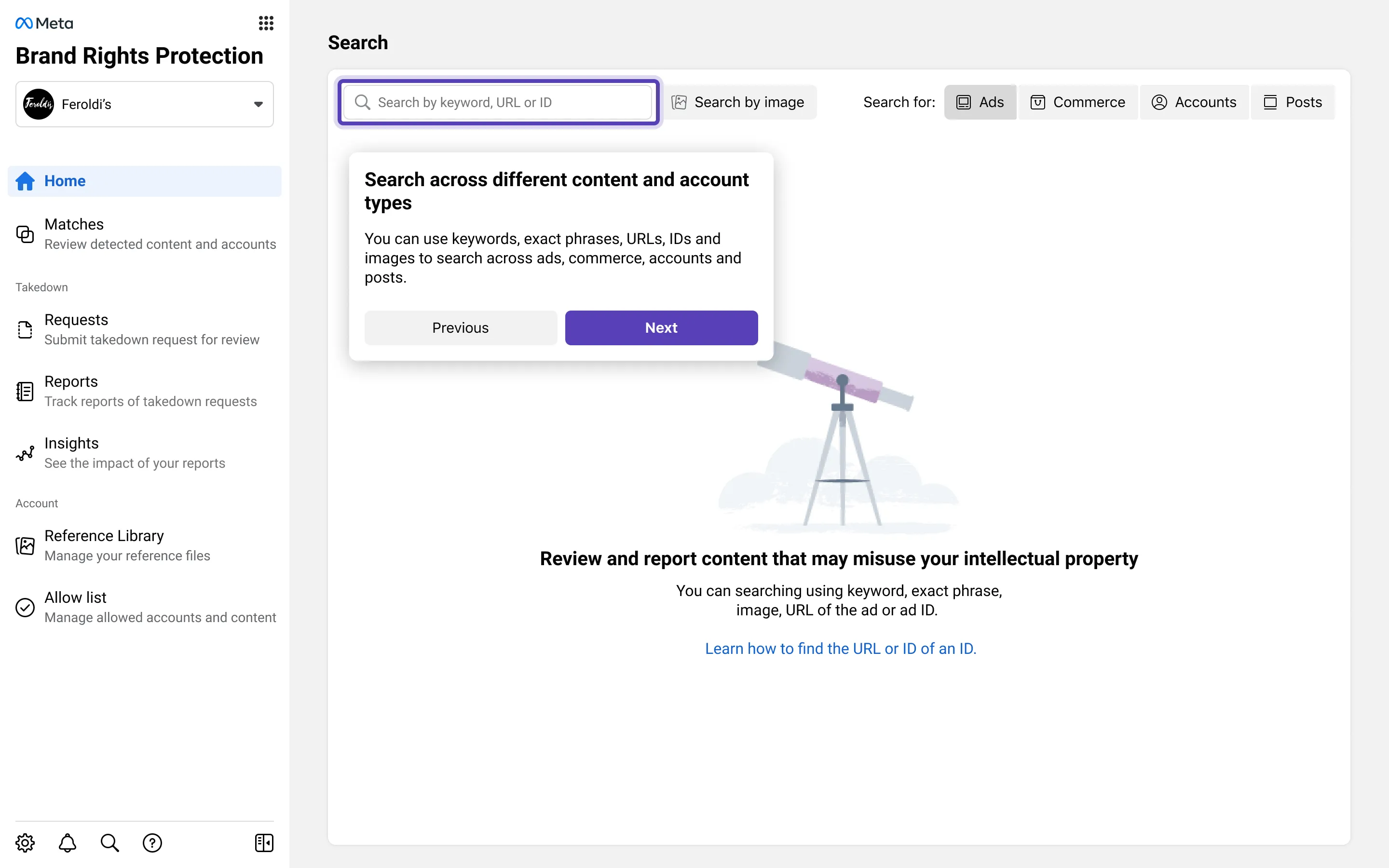
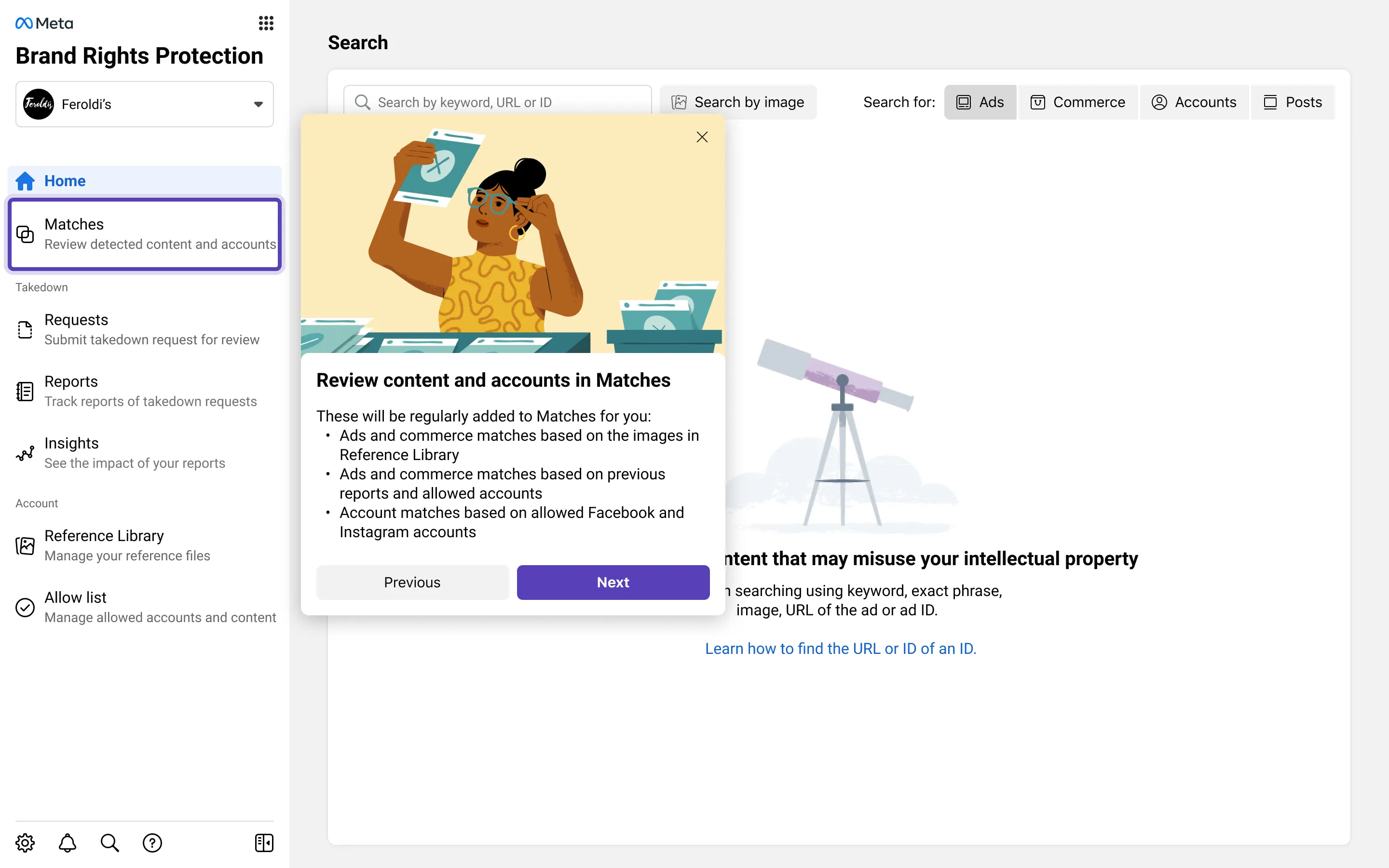
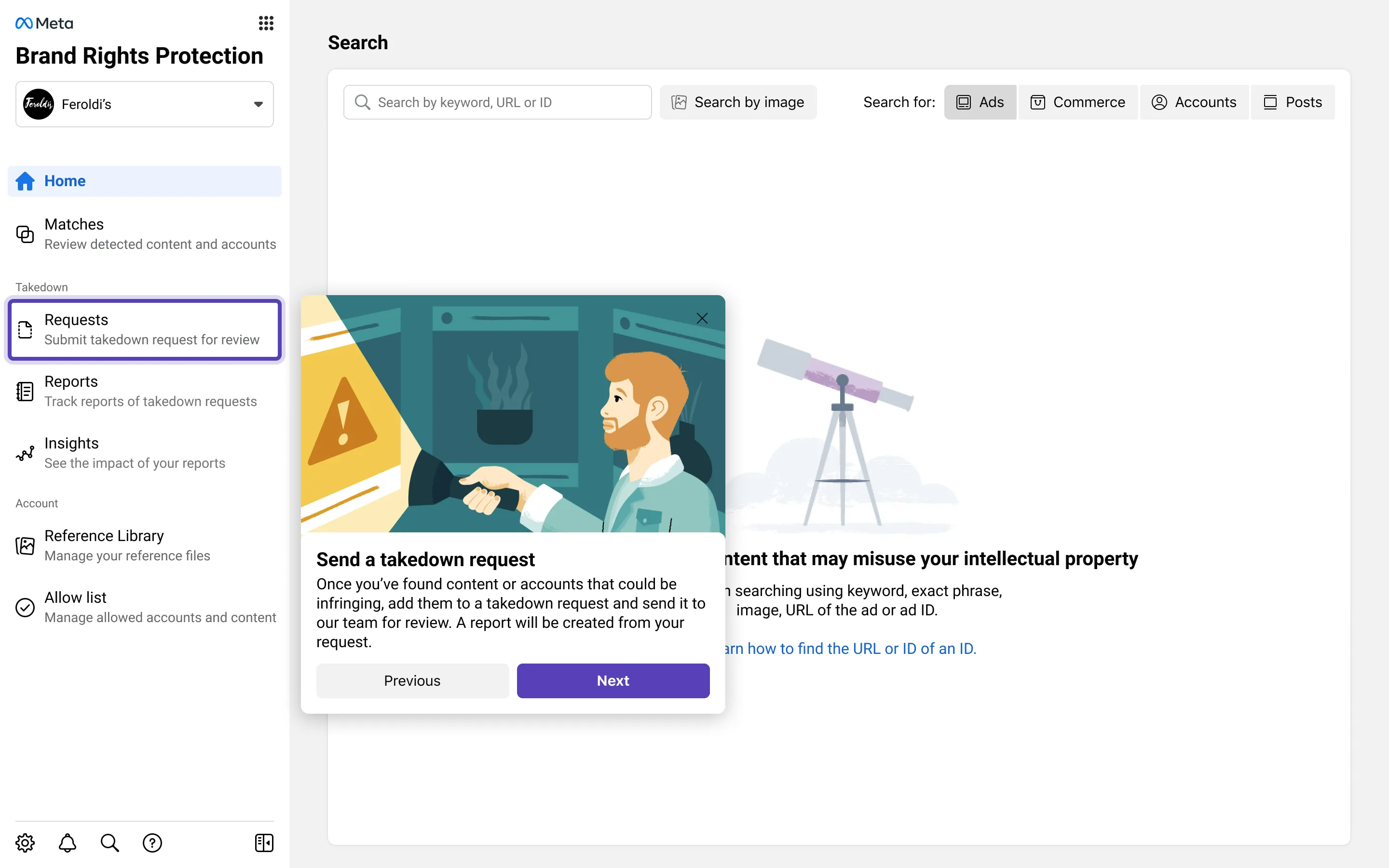
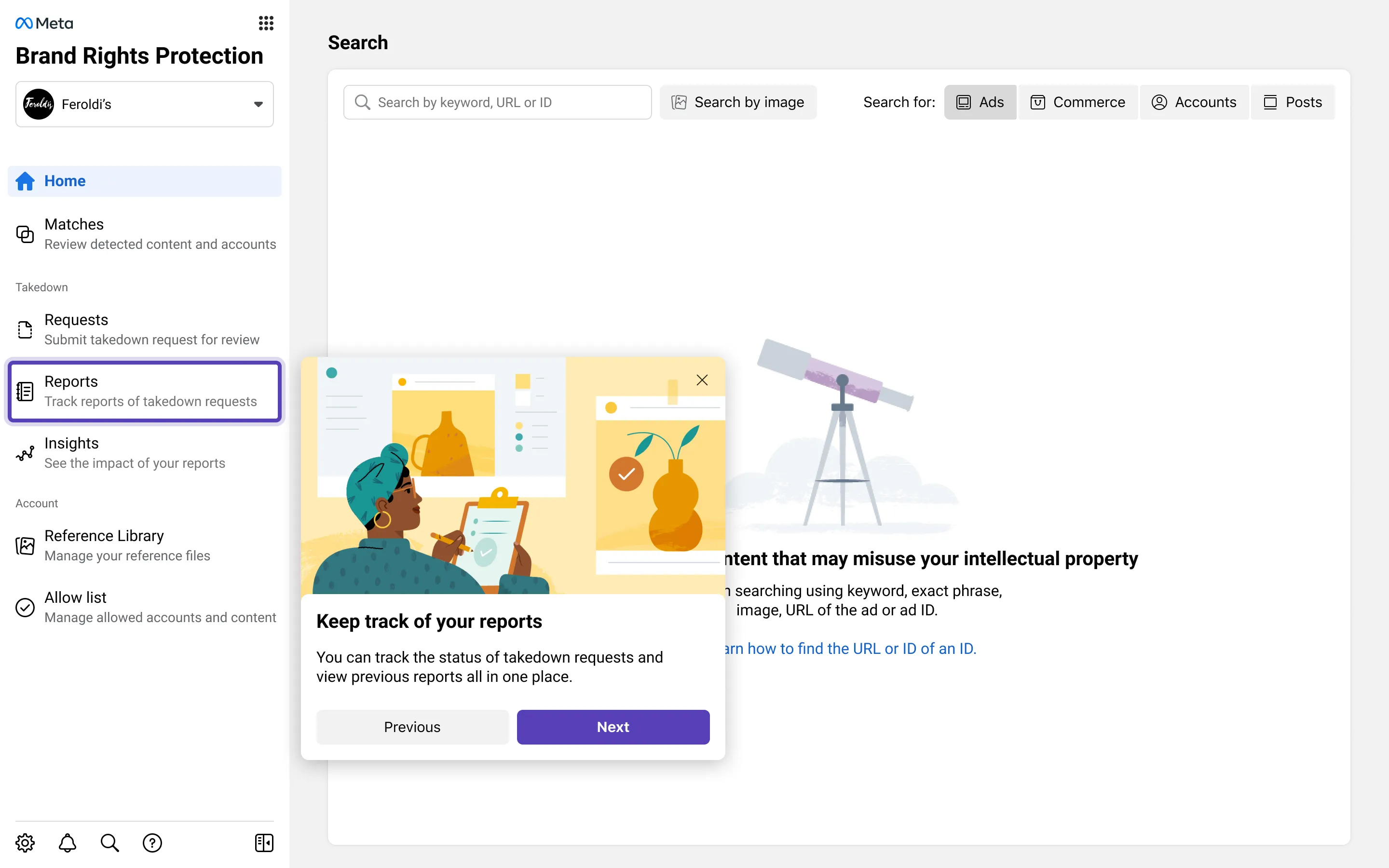
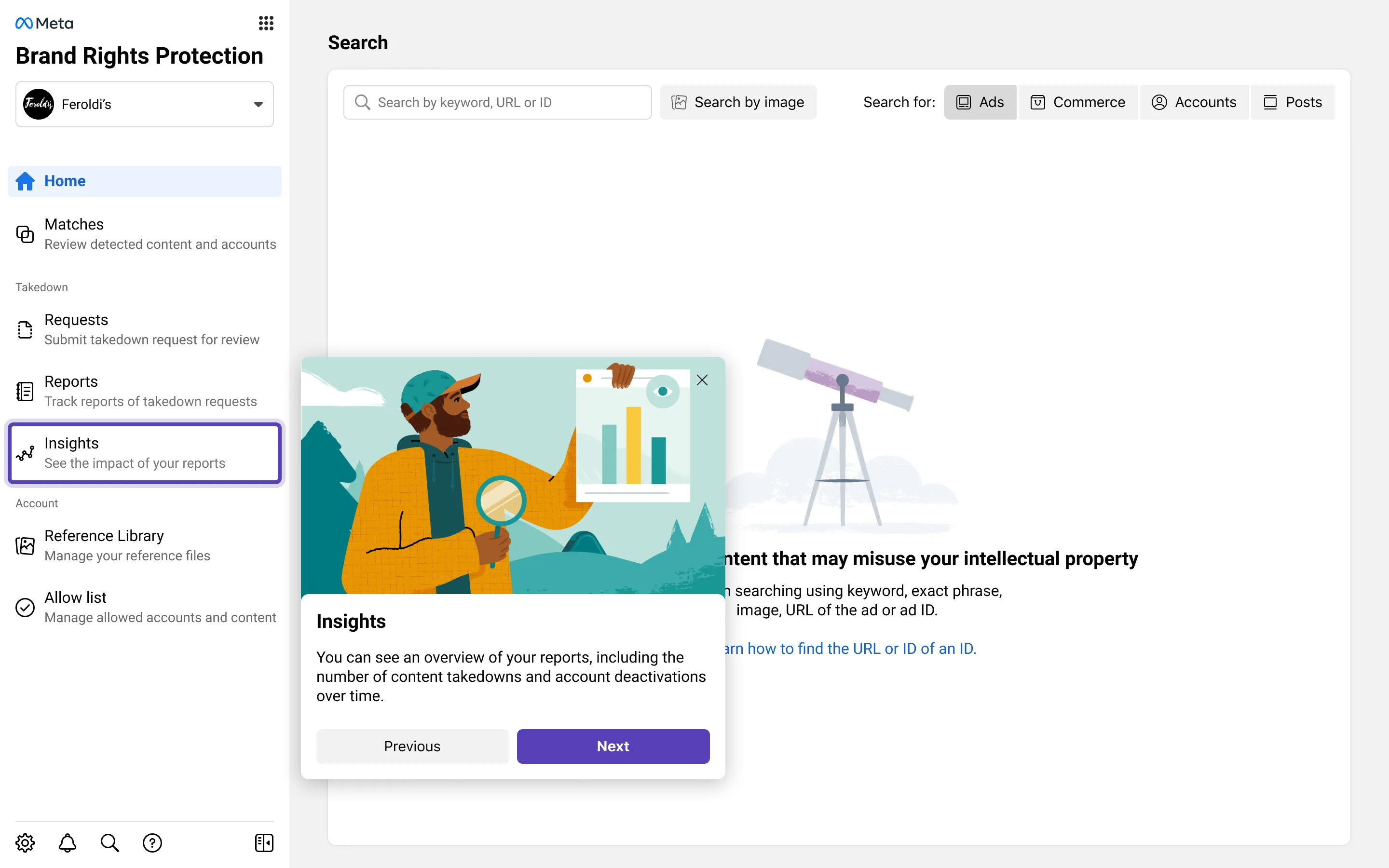
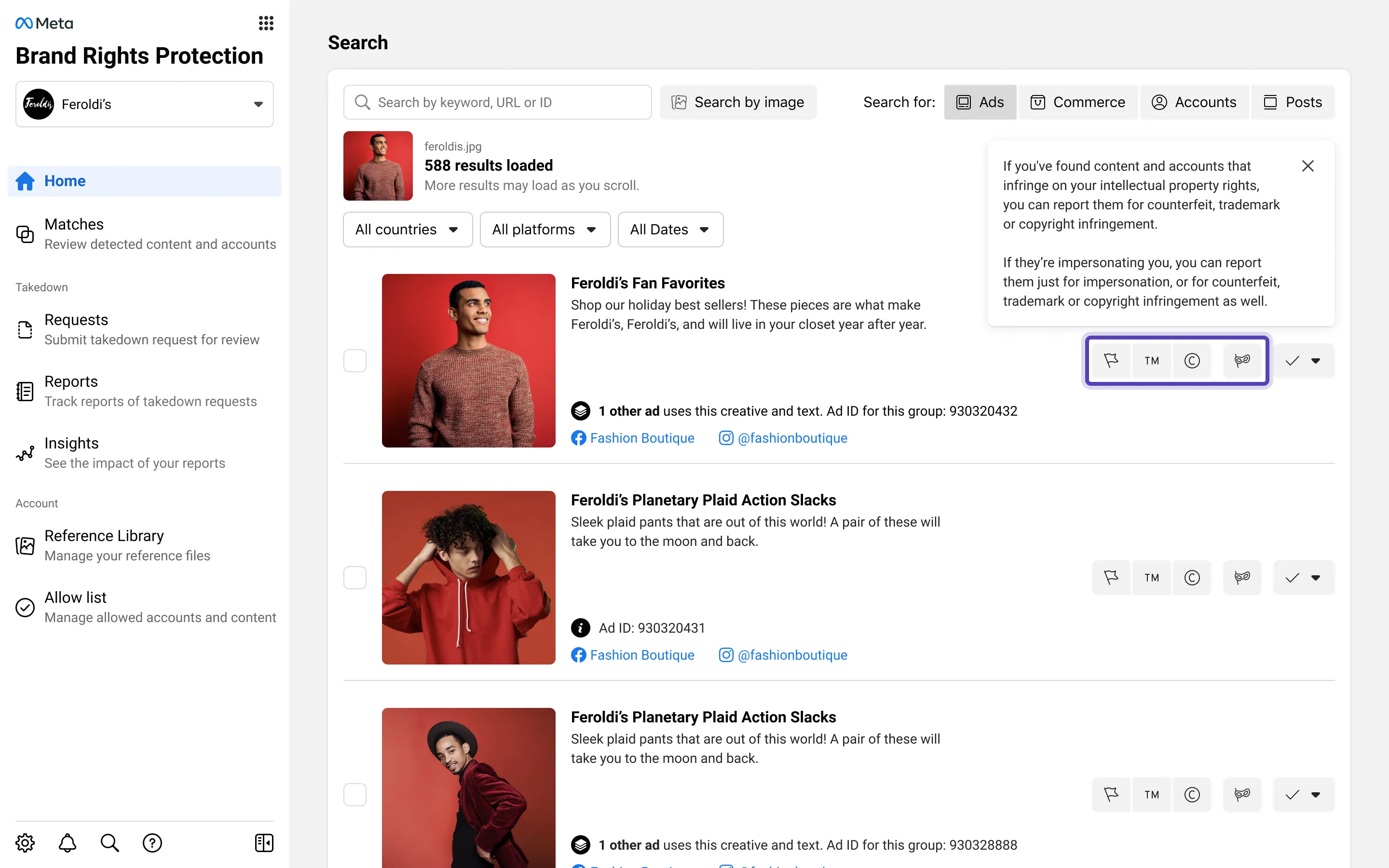
With a more guided onboarding experience in place, the next step was to strengthen the product's core functionality. We focused on improving how users discover and identify content and actors, streamlining the process of submitting reports, and introducing insights that help users understand the impact of their work. Together, these improvements made the core experience more efficient, actionable, and rewarding.
Strengthening Design System Adoption
When I first took on the project, it had very limited coverage of Meta's Business Design System. By consistently applying its components and patterns across the product experience, I helped bring design system coverage up to 90%. The remaining gaps were largely legacy components, which we identified and prioritized for future updates on the product roadmap.
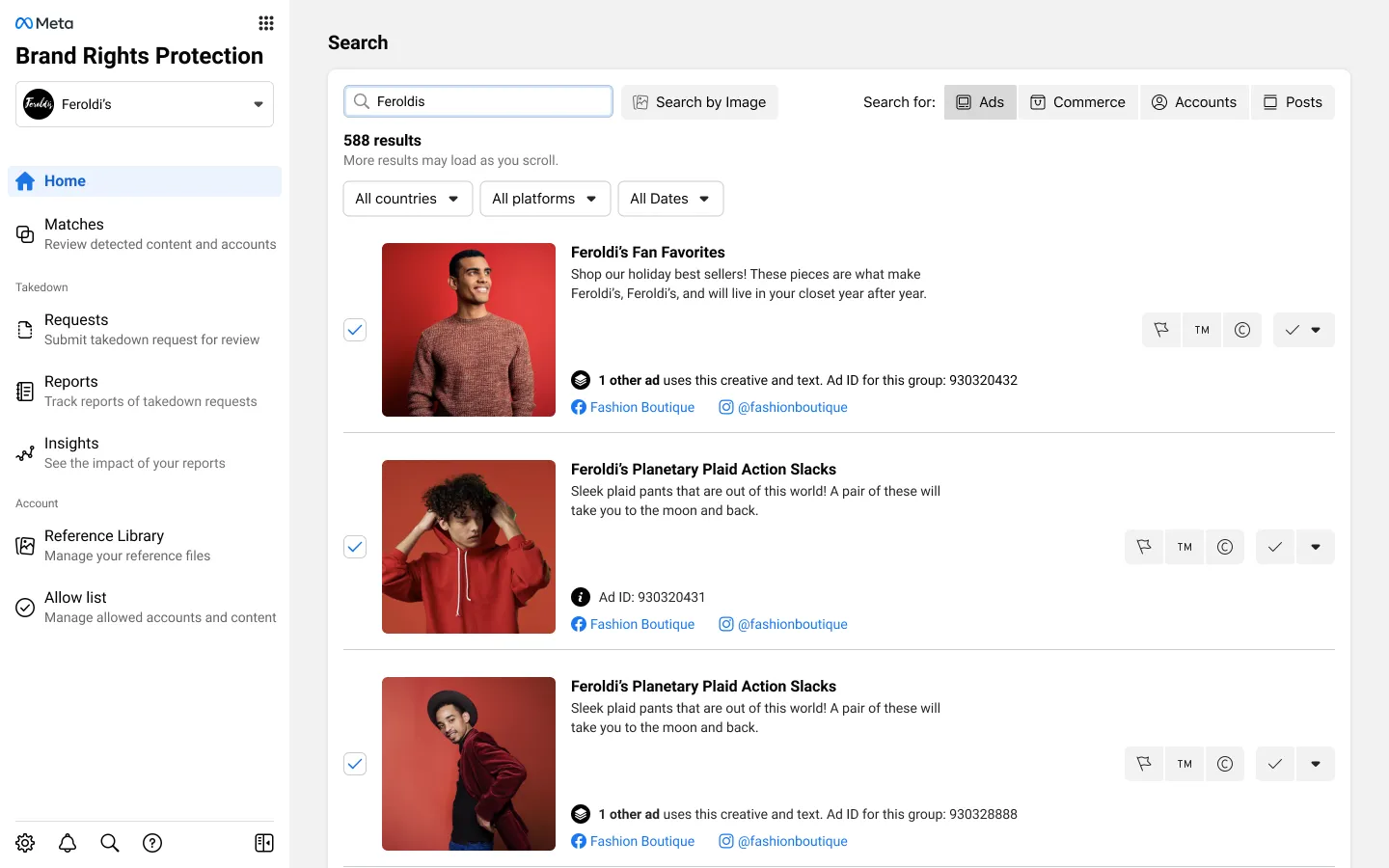
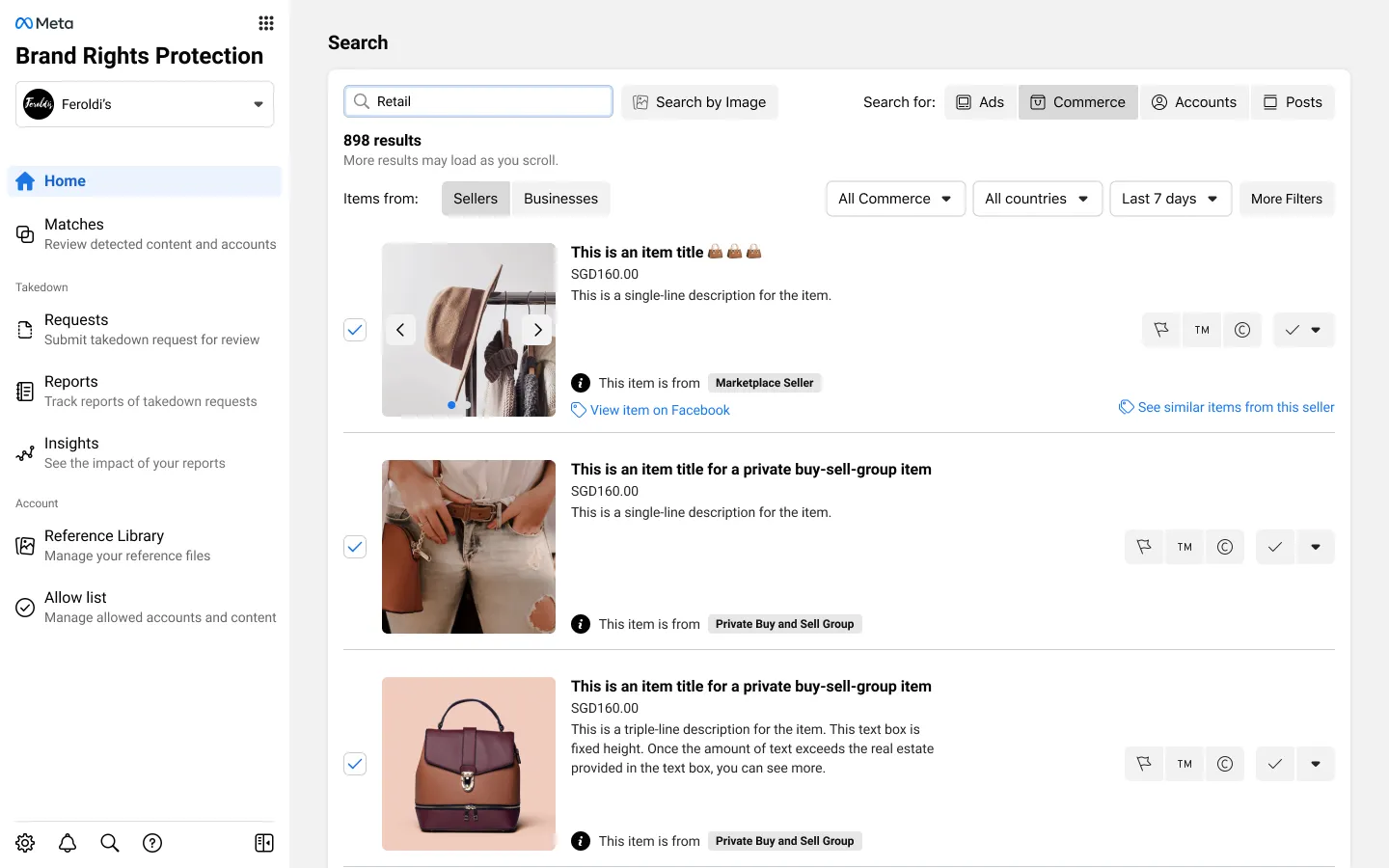
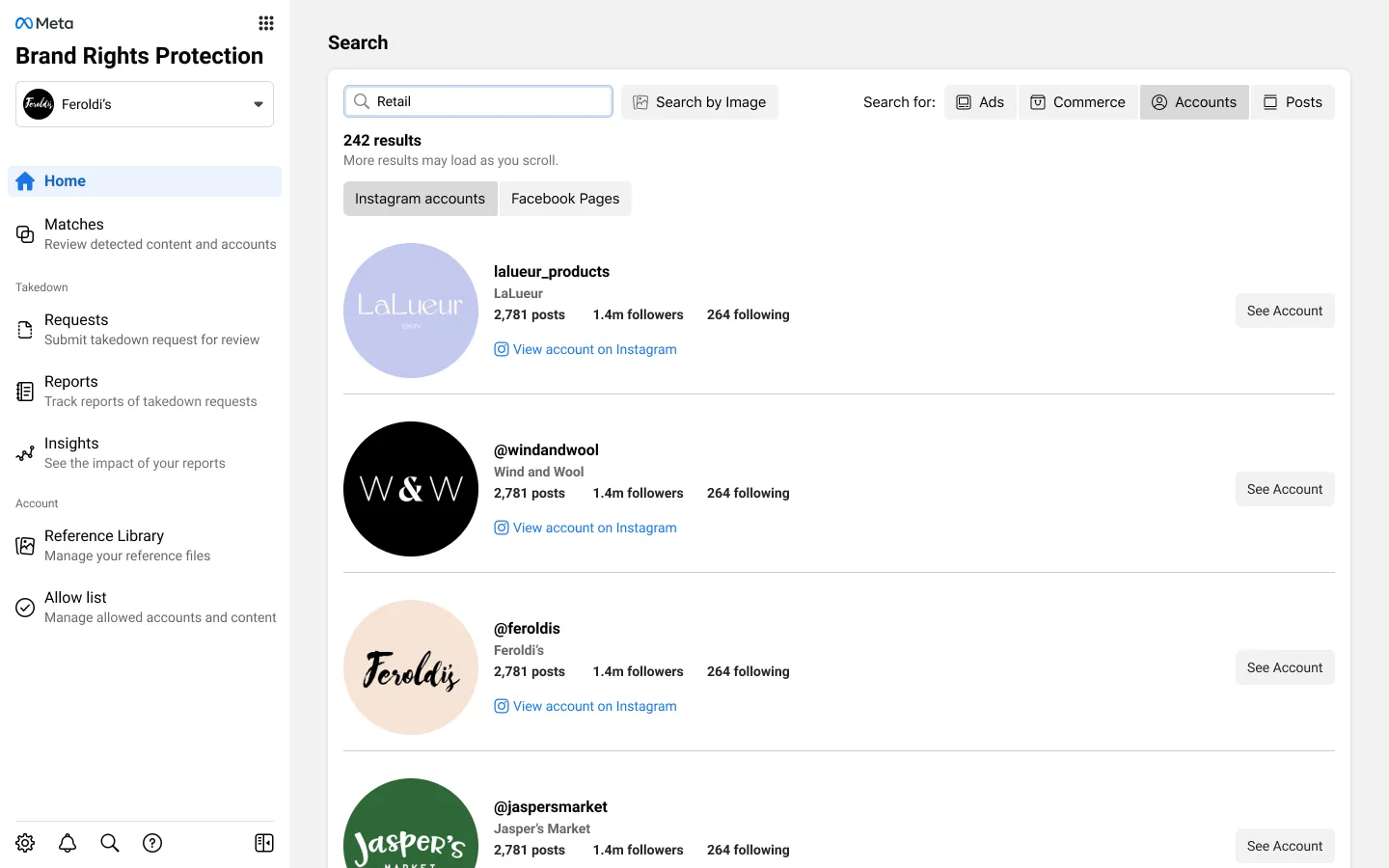
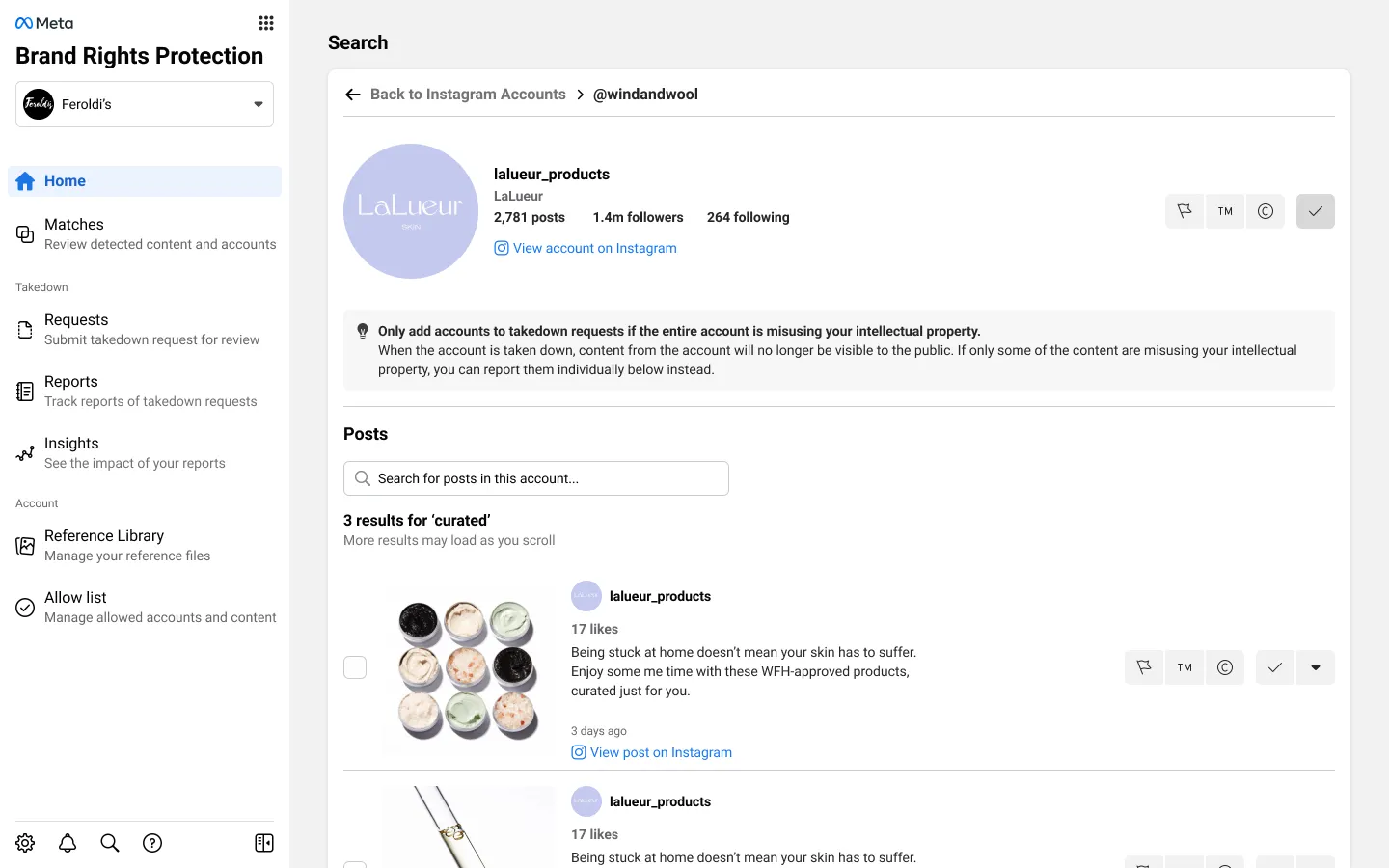
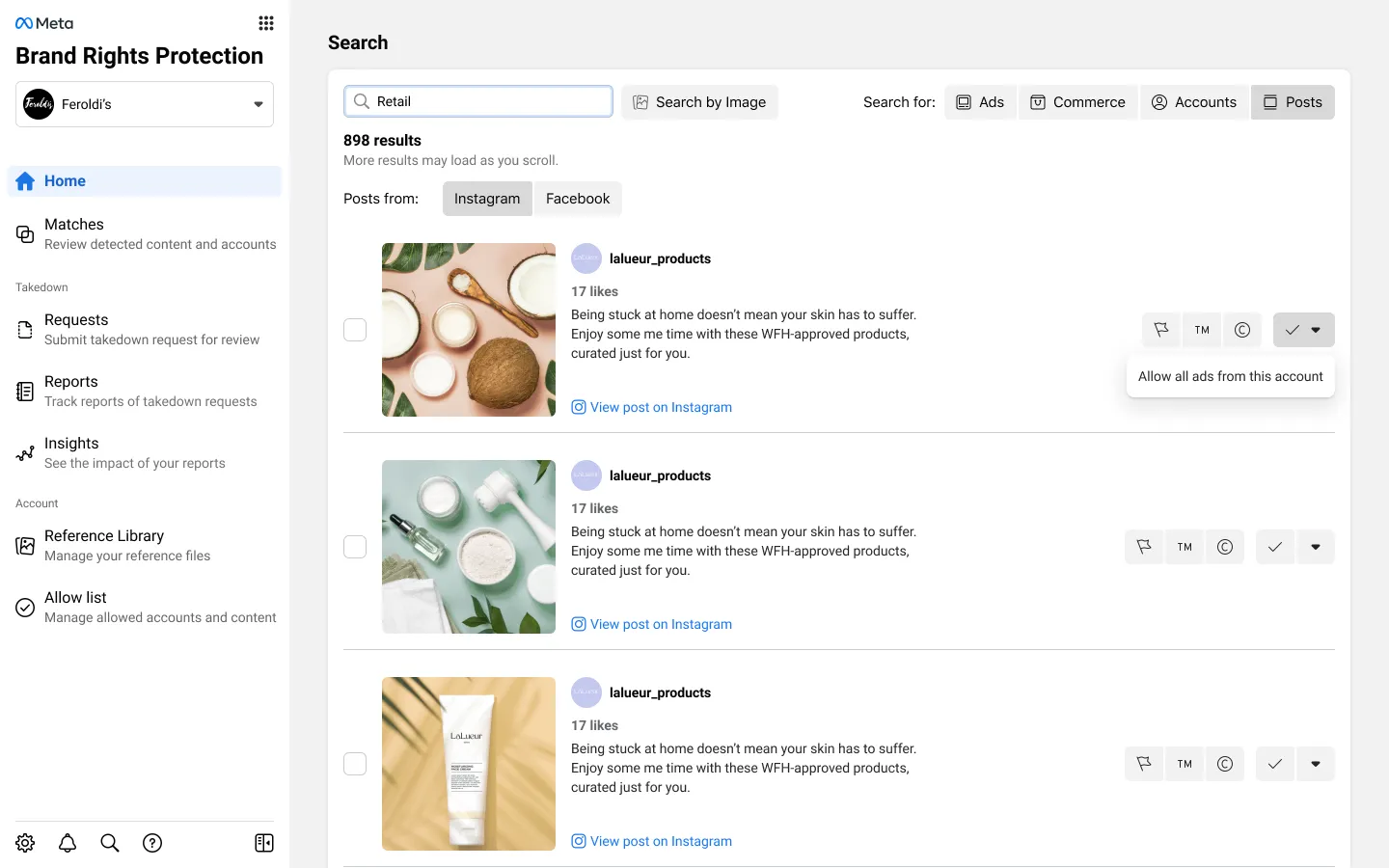
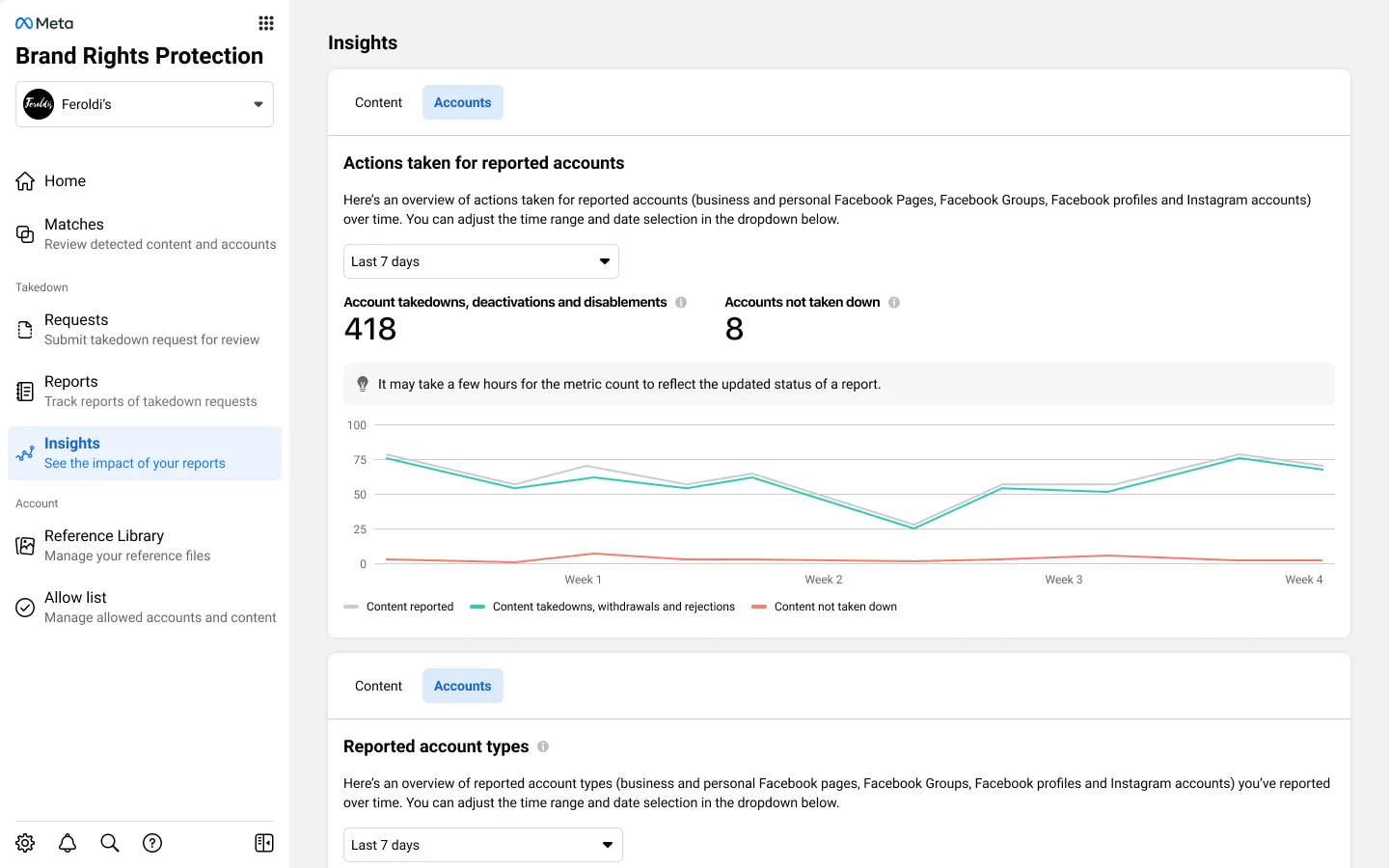
I also represented the product team as its Design point of contact during pre-launch Product Reviews, presenting proposed experiences to Design Organization Leads and demonstrating alignment with Business Design System standards. This helped ensure consistency across the product while strengthening our team's design system adoption.
Outcomes
- Monthly Active Businesses672Up 1,244%from ~50
- Customer satisfaction4.2/5Up 31%from 3.2/5
- Report action rate90% Maintainedfrom ~90%
Ahead of major public launches, I partnered with Product Marketing Managers to prepare the assets and materials needed to support go-to-market efforts.
I took ownership of staging product screenshots and demo videos, and collaborated with the Content Designer on targeted email campaigns for both active and inactive customers. These efforts helped bring new features to market and build awareness, including coverage in publications like Social Media Today and The Verge.