
Overview
I worked on this project in 2018 as a Product Designer and Prototyper. Over approximately two months, I led the design process from initial exploration and prototyping through stakeholder alignment and implementation.
Problem and context
Our research revealed that the majority of HOOQ subscribers in Indonesia primarily watched content on mobile, with streaming activity peaking during rush hours. This suggested that many subscribers were tuning in while commuting.
While HOOQ offered a library of on-demand movies and series, we saw an opportunity to expand the experience beyond traditional long-form entertainment.
We wanted to explore how subscribers might engage with more diverse, bite-sized content throughout their day—from utility-driven programming like news, weather, and sports to lighter, low-commitment content like recipe videos and short clips.
The challenge was to make HOOQ more than just a destination for movies and series, and turn it into a more versatile companion for everyday viewing.
Measuring success
We would measure the impact of live channels by tracking their contribution to the platform's overall streaming minutes. An equally important consideration was understanding whether live viewing would drive incremental engagement or cannibalize viewing time from HOOQ's existing on-demand catalog.
Content provider challenges
We worked with multiple content providers, each with different data structures and content capabilities. For example, one provider might offer only linear live feeds, while another might also support catch-up content, allowing viewers to watch previously aired segments on demand. Others went a step further by organizing catch-up content into programs and their respective episodes.
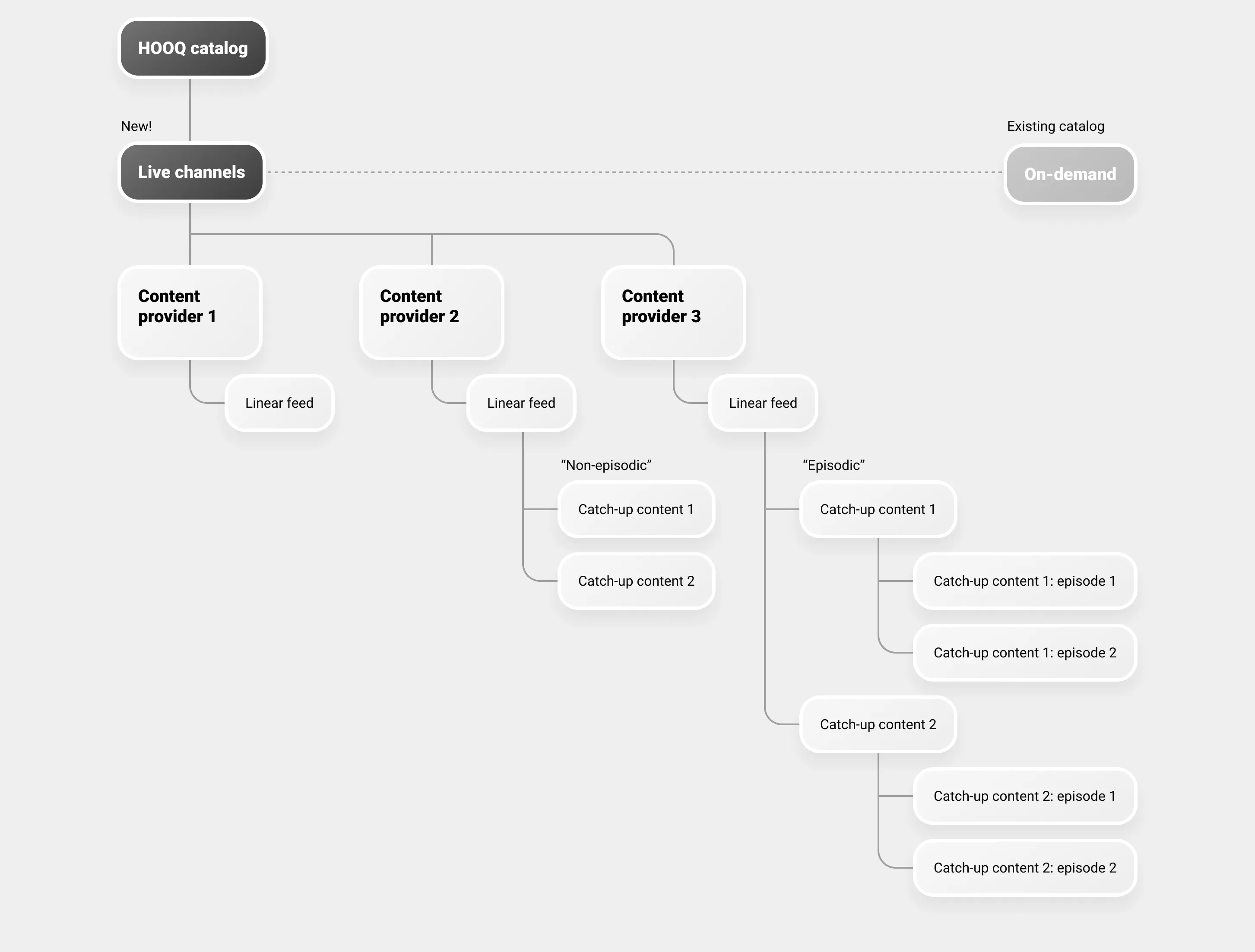
These variations resulted in a diverse content catalog that was challenging to standardize into a consistent viewing experience.
At a high level, we needed to accommodate two core content types:
- 01
Linear feeds
Live streams that viewers can watch in real time, much like traditional television channels.
- 02
Catch-up content
Previously aired programs or segments saved for on-demand viewing, typically associated with a specific channel.
User interactions
Recognition
We know from research that there are channels that users are familiar with, like their favourite local channels. At the same time, our content providers also have channels that might not be as popular but with potentially interesting content that users might engage with if they are able to discover them. We intended the interface to find a balance that allowed recognition of popular channels while providing some context on what the other channels might have to offer.
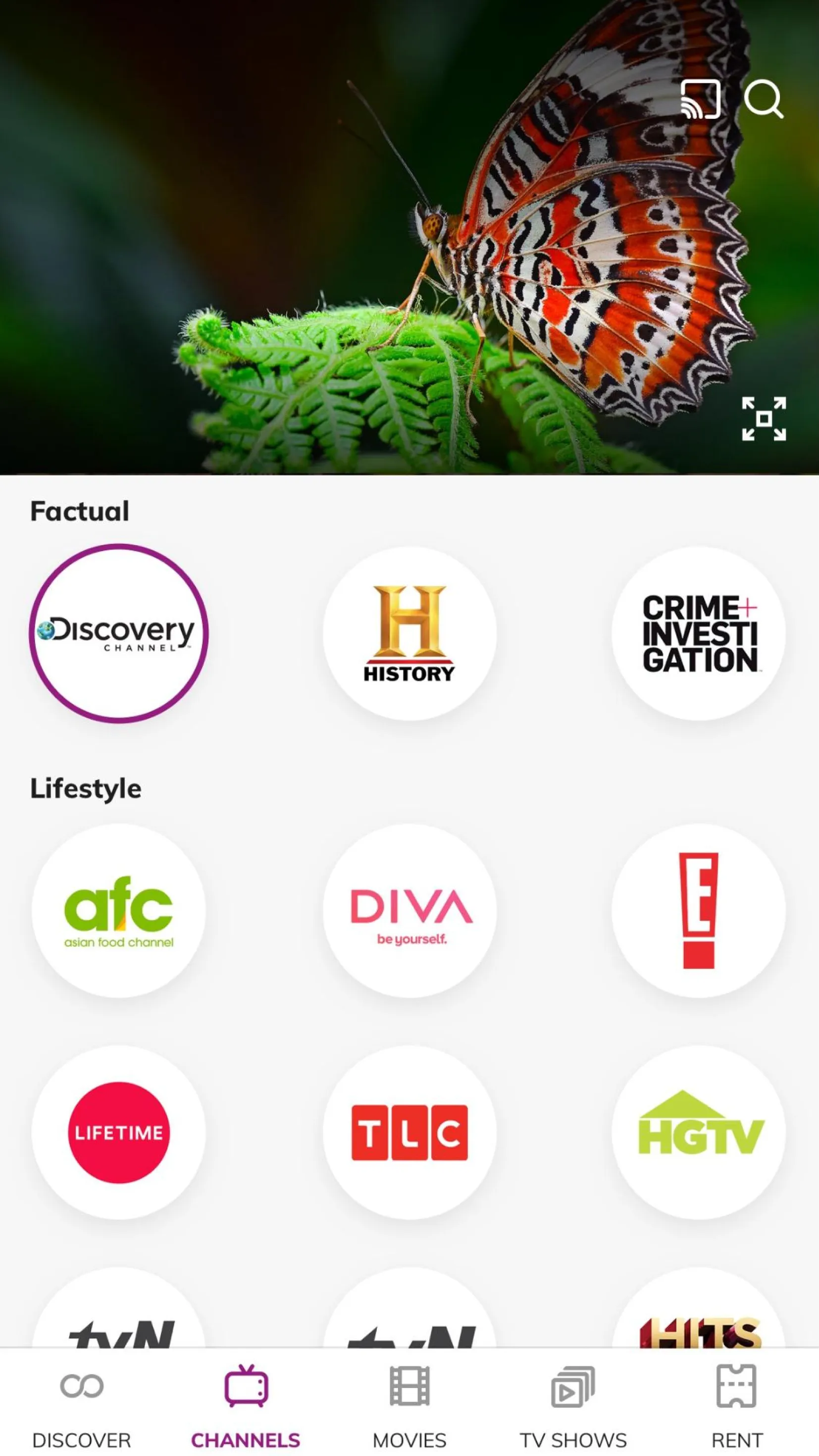
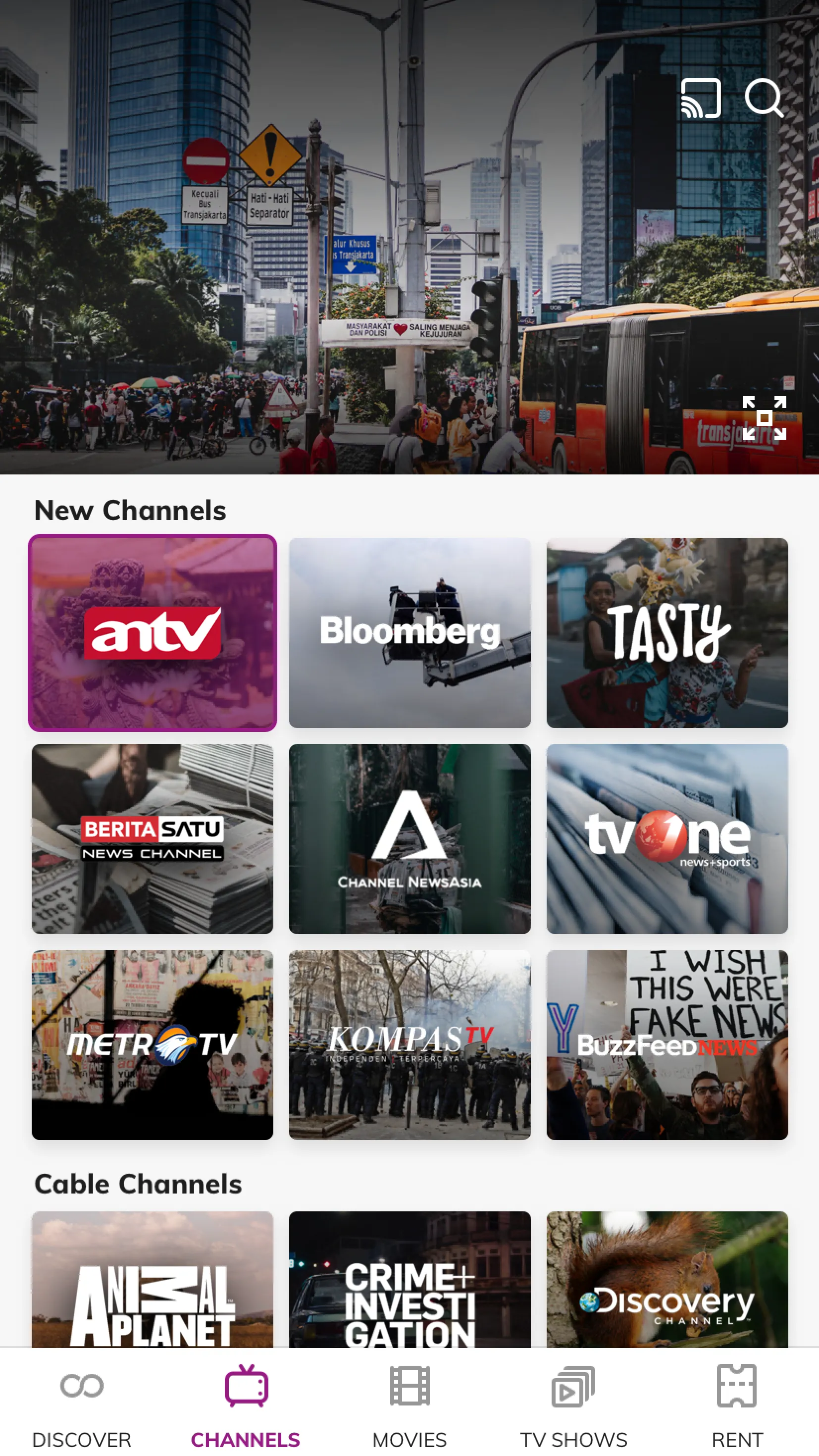
Channel surfing
A bottom sheet pattern that conveyed details on what the user is watching was used. It was important to prototype the mobile interactions at high fidelity to get proper contextual feedback based on what the actual product might end up looking like. Some micro-interaction details I added to the prototype was emulating static in between channel intervals to mimic channel surfing on a television.
Watching catch-up content: non-episodic
Below is the prototyped interaction I designed to surface the catch-up content available for this channel together with the live feed.
Watching catch-up content: episodic
When displaying episodic content, I made use of the existing episode-list-view we already use in the on-demand catalog. This was intended to provide familiar patterns for users.
Discovery points
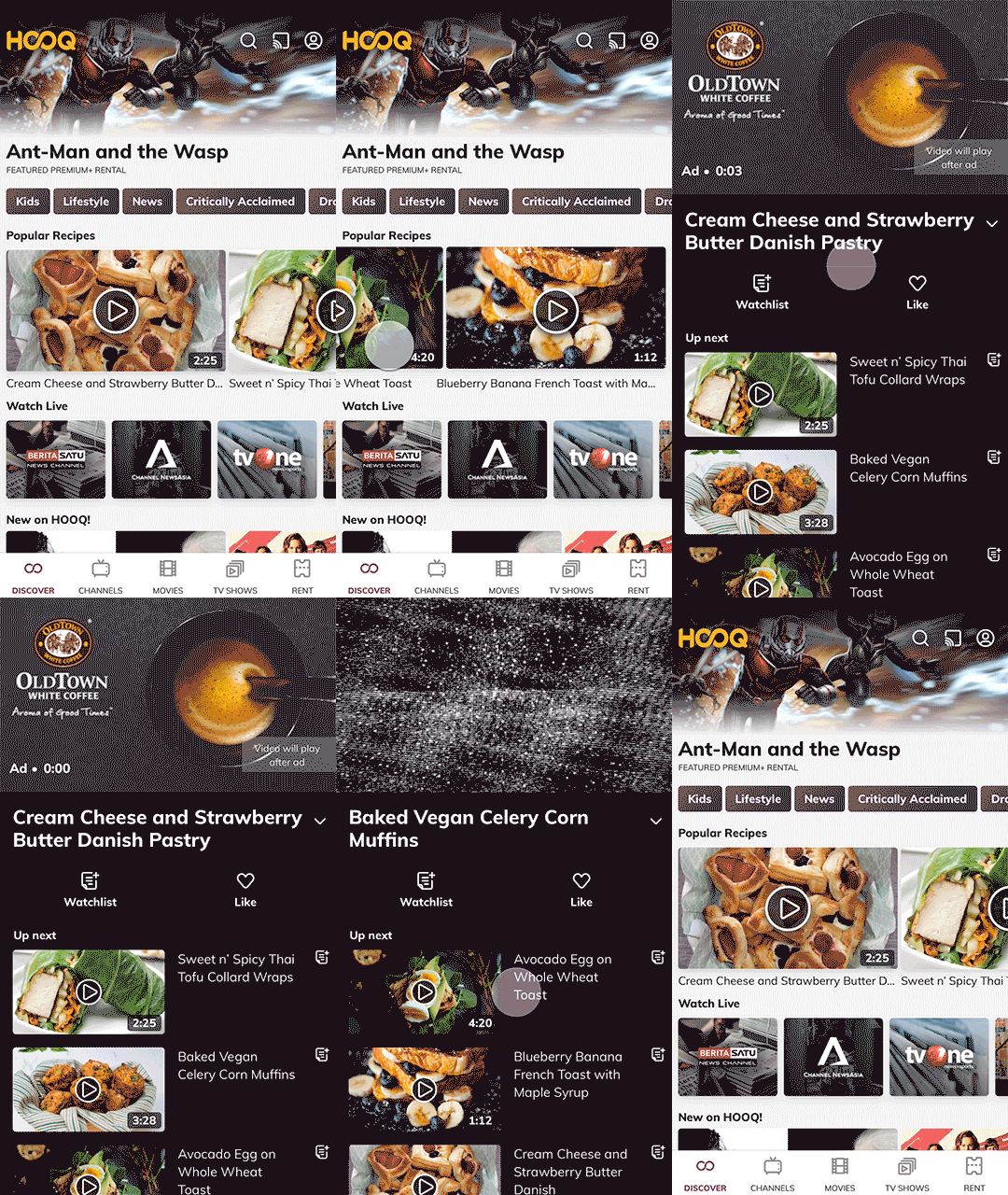
Live channels would have a dedicated section in the main navigation. However, since a significant portion of playback activity originated from the Discover (home) feed, we also explored introducing dedicated content rails to surface and promote live channels within the existing browsing experience.
Outcomes
What went well?
- High streaming minutes for local channels
- Increase in DAUs and MAUs
What didn’t go well?
- Only 3-5 local channels contributed to overall linear streaming minutes
- DAUs and MAUs didn’t go as high as we would have wanted
- We couldn’t implement catch-up content effectively yet
There was clear potential in this content offering, but the initial results were based on a relatively short observation period. A longer measurement window would have provided a more conclusive picture of its impact on viewer engagement and overall streaming activity. Unfortunately, HOOQ ceased operations in 2020, bringing the opportunity for further evaluation to an end.